


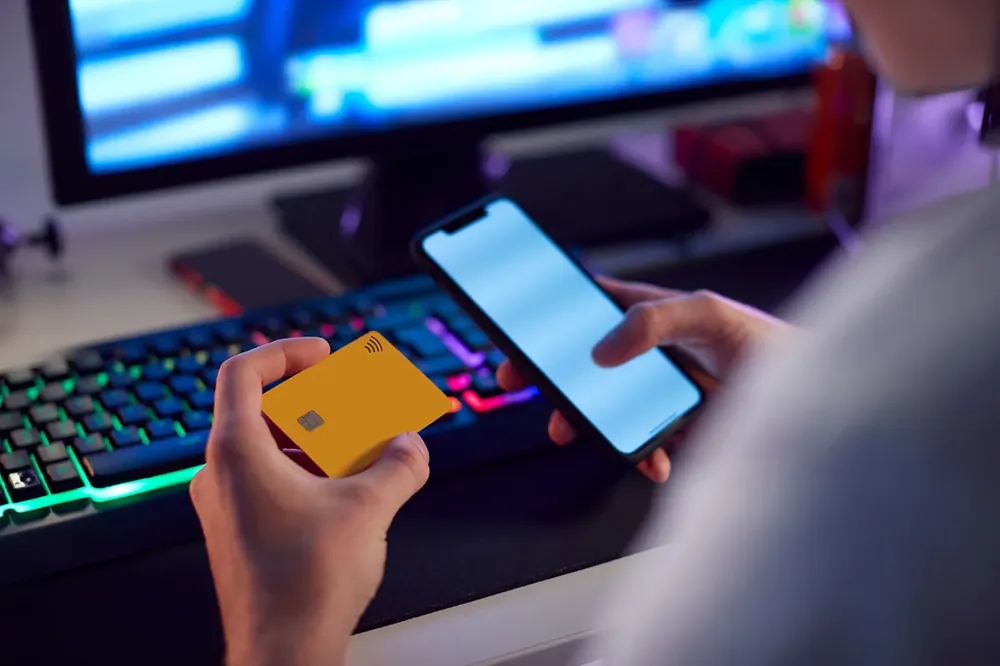
Social gaming platforms need reliable payment systems that convert casual players into paying customers. An online gaming merchant account designed for high-volume transactions, multiple payment methods, and global accessibility solves the friction that drives cart abandonment and lost revenue.
This guide shows how Seamless ACH's merchant account integration transforms payment processing for gaming platforms by reducing transaction failures, expanding payment options, and improving player satisfaction.
Why Gaming Platforms Need Specialized Merchant Accounts
Standard payment processors flag gaming transactions as high-risk, leading to account freezes, delayed settlements, and limited payment options. An online gaming merchant account solves these problems by offering higher-level features than traditional payment processors can:
Comparison: Standard vs. Online Gaming Merchant Accounts
Gaming platforms using specialized merchant accounts achieve significantly higher approval rates. Premium gaming payment gateways reach 93-98% approval rates through optimized routing and specialized relationships with acquiring banks.
Core Features of Seamless ACH's Gaming Merchant Account
Seamless ACH provides infrastructure designed specifically for social gaming payment processing:
Payment Method Diversity
Accept credit cards, digital wallets (Apple Pay, Google Pay), cryptocurrencies, and region-specific options like Alipay and iDEAL. Players in different markets get payment methods they trust.
Smart Routing Technology
Optimized payment routing typically increases acceptance rates by 3-8%, with some implementations achieving up to an 11 percentage-point improvement. Transactions automatically route through the processor with the highest approval rate for that region and payment type.
Subscription Management
Handle recurring premium subscriptions with automated retry logic when cards expire or decline. Optimized retry strategies can recover up to 70% of initially failed payments.
Real-Time Analytics
Track transaction volume, approval rates, popular payment methods, and revenue by game or feature through a unified dashboard.
Seamless ACH Integration: Implementation Steps
The following steps outline the process of integrating Seamless ACH into your existing payment architecture. Keep in mind, as you read, that this can be done DIY or through a trusted provider like Seamless Chex.
1. Account Setup and Configuration
Create your merchant account at Seamless ACH's platform with:
- Business documentation (EIN, incorporation papers, Legal Opinion Letter)
- Platform details (website URL, monthly volume estimates)
- Banking information for settlements
Approval typically takes 24-48 hours. Configure your payment preferences, including:
- Accepted payment methods by region
- Currency options
- Transaction limits
- Fraud prevention thresholds
2. API Integration
Seamless ACH's RESTful API connects your platform to the payment system:
- Get API credentials from your merchant dashboard
- Install the SDK for your platform (Unity, Unreal, custom frameworks)
- Implement payment endpoints for purchases, subscriptions, and refunds
- Configure webhooks to receive transaction status updates
- Test in a sandbox environment with sample transactions
The API handles tokenization automatically, so you never store sensitive data on your servers.
3. Payment Flow Customization
Design checkout experiences that match your game's interface:
- In-game purchase screens with dynamic product catalogs
- Subscription upgrade flows showing feature comparisons
- One-click purchases for returning players with saved payment methods
- Localized pricing displaying costs in the player's local currency
4. Security Implementation
Layer security measures beyond Seamless ACH's built-in protections:
Security Checklist
5. Testing and Quality Assurance
Before going live, validate:
- Transaction processing across all payment methods
- Error handling for declined cards, expired cards, and insufficient funds
- Receipt delivery via email and in-game notifications
- Refund workflows for customer service scenarios
- Performance under load simulating peak traffic
Run a minimum of 100 test transactions covering success and failure scenarios.
6. Launch and Monitoring
After deployment, monitor these metrics weekly:
Use Seamless ACH's reporting tools to identify patterns. A sudden drop in approval rates in a specific region may indicate processor issues that require smart routing adjustments.
Maximizing Revenue After Integration
Optimize Payment Options
Analyze which payment methods drive the most conversions in each region. Gaming transactions show varying approval rates by payment type, with e-wallets typically achieving 95-98% approval compared to 85-92% for card transactions.
Reduce Friction Points
Research shows that 18% of online shoppers abandon their purchases due to overly long or complicated checkout processes. Implement one-click purchasing for returning players using tokenized payment credentials.
Test Pricing Strategies
A/B test different price points and currency displays. Localization can boost ecommerce conversion rates by up to 70%. Showing prices in local currency significantly increases purchase likelihood.
Leverage Subscription Retry Logic
Configure automatic retry attempts for failed subscription renewals. Spreading retries over 7 days with optimized strategies recovers up to 70% of failed payments.
Get an Online Gaming Merchant Account Today
An online gaming merchant account purpose-built for social gaming platforms eliminates payment friction that costs revenue. Seamless ACH's specialized infrastructure (supporting diverse payment methods, smart transaction routing, and gaming-specific fraud detection) positions your platform for international growth.
FAQ
How long does Seamless ACH merchant account approval take?
Most approvals are complete within 24-48 hours after submitting the required documentation.
What transaction fees should I expect?
High-risk gaming merchant accounts typically charge between 4-8% per transaction, compared to 1.5-3% for standard accounts.
Does Seamless ACH support cryptocurrency payments?
Yes, Seamless ACH processes Bitcoin, Ethereum, and 15+ additional cryptocurrencies with automatic conversion to fiat currency.
Can I process international payments?
Seamless ACH supports 150+ countries and 135+ currencies, with automatic currency conversion and region-specific payment methods.
What security certifications does Seamless ACH maintain?
Seamless ACH maintains PCI DSS Level 1 compliance, SOC 2 Type II certification, and GDPR compliance for European markets.