


Quick Answer
A top-up dispute challenges the card charge that loaded site credit; a pull dispute challenges what that credit bought. Answer each with its own evidence, or winnable cases and your ratio both suffer.
As a 2018 Reddit post on chargebacks put it, a charge-back is "forced removal of money, and only initiated by a single party." The issuer rules on the funding charge alone. Proof that the balance was credited and then spent has to come from you.
Key Points
- The CFPB logged 72,074 dispute complaints between 2025-11-09 and 2026-11-09, filing prepaid cases as a "purchase or transfer" apart from credit card purchase disputes.
- Chargeflow reports Visa's monitoring threshold as a 0.9% fraud-plus-dispute ratio with at least 1,000 events in a month, and every lost top-up case counts toward it.
- A disputed top-up is won with proof the cardholder authorized the load, a timestamped ledger showing the balance credited, and records of what that credit bought.
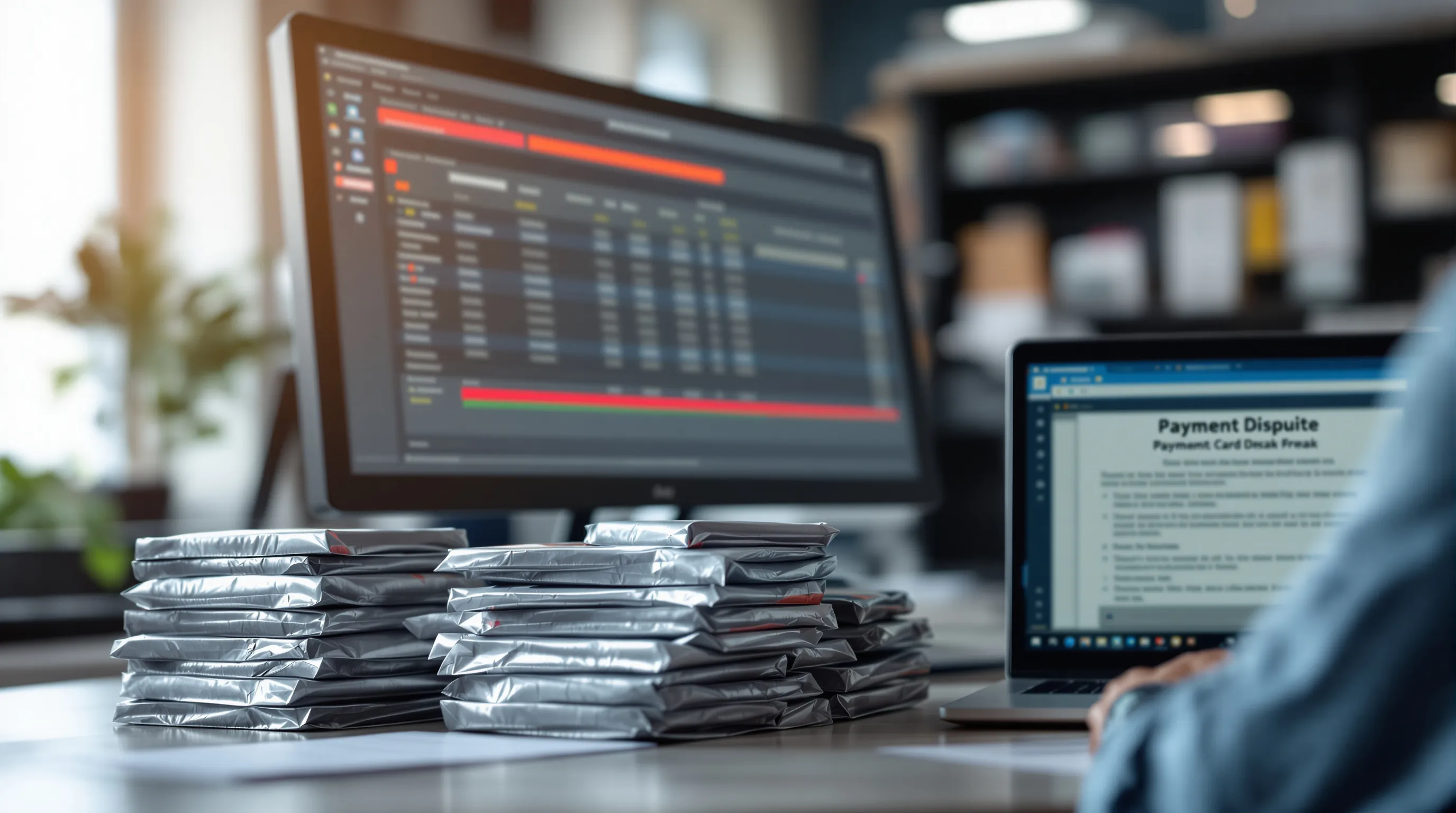
A disputed top-up is answered from the ledger, not the pack.
A 2018 Reddit thread for Fallout 76 players made a point that maps neatly onto prepaid credit. Its author warned that a buyer who charged back a digital game bought on Xbox or PSN could lose the entire platform account, because "you took it from Xbox/PSN," not from the publisher. The money trail decided who answered the dispute. Your site works the same way. A buyer either disputes the top-up that funded the balance or the pull that spent it, and I would settle which one before pulling a single record for the response.
A top-up dispute and a pull dispute can land in your queue looking identical, yet they ask the issuer different questions. The top-up is the card-funded load of site credit. The pull is what that credit later bought. Which charge is the buyer actually contesting? Payments strategist Dwayne Gefferie notes that when a cardholder disputes a charge, whether it is genuine fraud or a purchase they regret, "that dispute gets coded in the issuer's system as fraud." That leaves the sorting to you, before a single document goes into the response.
What separates a top-up dispute from a pull dispute?
A top-up dispute challenges the card payment that loaded prepaid credit. A pull dispute challenges what that credit bought: the randomized card the buyer received.
Before you respond to any case, sort it with three plain questions:
- Does the disputed amount match a single balance load, or an order placed with that balance?
- Had the buyer already spent the credit on packs, breaks or spots?
- Does the complaint describe the charge itself, or the card the buyer pulled?
The CFPB logged 72,074 dispute complaints between 2025-11-09 and 2026-11-09, and its own labels split the two ideas. Prepaid card complaints were filed as a problem with a "purchase or transfer," while credit card complaints were filed as a "purchase on your statement." Regulators already treat moving money onto a balance as something different from buying a thing.
Our underwriting team frames these merchants the same way. An acquirer is not pricing trading cards; it is pricing prepaid credit, a randomized outcome, delayed physical fulfillment, stored balances and buybacks. A top-up lives in the first bucket. A pull lives in the second.
The vocabulary gets tangled fast. Backspace Tech describes a card-funded load of a prepaid account or wallet as an Account Funding Transaction, which it calls a "pull" on the cardholder's account under Visa and Mastercard rules. The same explainer argues these transactions are not subject to chargebacks. I would not plan around that claim, because cardholders plainly still bring transfer disputes to regulators.
The research section below walks through these findings. It helps to separate payment finality from commercial dispute resolution. The funding card can settle cleanly while the buyer still argues about the pack. That gap matters when you choose a high-risk credit card processing partner, because the issuer only ever sees the funding line.
Who really decides a disputed top-up, and what can they see?
One marketplace seller saw the platform refuse a buyer's return, and then saw the buyer's bank give the money back anyway. For a prepaid credit platform, that split decision explains a lot.
On an eBay community forum in 2023, a seller described a $1000 item that had passed eBay's authentication. When the buyer said it "arrived scratched," eBay declined the return. The buyer then "filed a payment dispute with his bank and after 3 months it says he won the dispute." eBay absorbed the loss under its seller protection. A platform selling its own credit has nobody above it to do that.
The reason is structural. In Visa's explainer for merchants, the merchant sends its evidence to its acquiring bank, which passes it to the cardholder's issuing bank, and the issuing bank decides. In another eBay thread, about a $1,550 chargeback, one commenter put it plainly: "the credit card company is the one making the decision, not eBay." A refusal under your refund policy or your terms does not settle the case at the bank.
And the bank sees very little. Dwayne Gefferie, a payments strategist who writes the Payments Strategy Breakdown newsletter, explains that card transactions travel on ISO 8583, a messaging standard "built in 1987 for speed, not richness." They pass through a gateway, an acquirer and a card network before reaching the issuer, and details such as device fingerprint, session history and account age drop away. Gefferie writes mostly about approvals, but notes that when a cardholder disputes a purchase they regret, "that dispute gets coded in the issuer's system as fraud."
For a top-up, that thin record is a real problem, because almost everything that gives the charge its meaning happens afterward. Our underwriting team describes what a processor actually prices on a rip or break platform: "prepaid credit, a randomized outcome, and delayed physical fulfillment, with stored balances and buybacks in the middle." The issuer sees only the first of those.
One buyer's money, and the part the bank sees
- A card charge loads credit. The cardholder's statement shows this step, and the dispute names it.
- The credit sits on the platform as a stored balance.
- The credit buys a pack or break spot with a randomized outcome.
- The pulled card ships later, stays in the vault, or is sold back to the platform.
Drawn from our underwriting team's description of the business model, September 2026.
Ale Aznar, founder and CEO of Payment Methods List, a curated database of local and alternative payment methods, offers a useful way to separate the problem.
"I think the easiest way to understand this is to separate payment finality from commercial dispute resolution."
Ale Aznar, founder and CEO of Payment Methods List, 2026
In the same 2026 interview, Aznar noted that "the payment itself can be legitimate while the buyer later abuses the marketplace's refund process." On a rip platform, the top-up sits on the payment side of that line. A complaint about what a pack delivered sits on the commercial side.
Card networks use the word "pull" differently. Backspace Tech, a firm that automates disputes for banking operations, wrote in 2024 that loading a digital wallet is a "pull" transaction, known as an Account Funding Transaction, while a refund to the card is a "push." It also claims funding transactions cannot be disputed or charged back. Visa's public rules, in the 24 October 2026 edition, list Account Funding Transactions as their own transaction type, give stored value digital wallets a separate section, and include dispute condition 13.8 for Original Credit Transactions. The sections we reviewed do not settle whether a funding transaction can be disputed, and the explainer is inconsistent: it calls these transactions cardholder-initiated, yet says they give the provider "control over the timing and amount of the withdrawal."
| On a prepaid credit platform | In card-network vocabulary | |
|---|---|---|
| What "pull" means | The card a buyer gets from a pack or break | A card charge that loads a wallet or prepaid balance |
| When it happens | After the credit is spent | When the credit is loaded |
| Which card charge a dispute names | The top-up that bought the credit | The same top-up |
Whatever the networks end up calling it, the dispute still counts toward your ratio. Chargeflow, a chargeback software company, reports Visa's monitoring threshold as a 0.9% fraud-plus-dispute ratio with at least 1,000 events in a month, and Mastercard's as starting at 100 chargebacks with a 1.5% ratio. Its guide adds the point that matters most for pack complaints: "A resolved complaint before it escalates never counts against your dispute ratio."
So the dispute and the risk sit at opposite ends of one chain. The cardholder's bank rules on the first link, the card charge, and knows almost nothing about the balance, the outcome, the shipment or the buyback, where your exposure actually lives. The issuer only sees how they connect if your response shows it.
- Before building a response, decide whether the cardholder is challenging the load itself or something the credit bought later.
- Write for a bank reviewer who has never seen your platform: explain in plain terms that the charge bought credit, and show the ledger line from that charge to what the credit paid for. One eBay seller who won a dispute advised a "very businesslike form since the bank will be reading it and not eBay."
- Ask your processor whether your top-ups are processed as ordinary purchases or as Account Funding Transactions, and which dispute rules follow from that.
- Send complaints about pack outcomes, shipping delays and buybacks to support quickly, because a complaint you resolve before it becomes a dispute stays off your ratio.
How we checked this
Our sources: Visa's merchant explainer on chargebacks and the public table of contents of its Core Rules, a payments strategist's newsletter, an interview published by an identity verification company, a dispute firm's explainer, a chargeback software company's guide, two eBay community threads, and our own underwriting team's description of rip and break platforms. The five-part business model comes from us. The eBay threads are individual seller accounts about marketplace sales, not prepaid credit. Gefferie writes mainly about approvals. We reviewed only the contents listing of Visa's rulebook, and the monitoring thresholds come to us secondhand. Chargeflow, Backspace Tech and the interview's publisher sell dispute or fraud tools. We board merchants in this segment, so we have a stake in this answer. Still unknown: how often issuers rule for merchants on top-up disputes specifically, and whether processing top-ups as funding transactions changes the cardholder's dispute rights.
- Visa, chargebacks explainer for merchants, undated.
- Visa, Visa Core Rules and Visa Product and Service Rules, 24 October 2026 edition, retrieved November 9, 2026.
- Dwayne Gefferie, The Issuer Paradox newsletter essay, March 2026.
- Ale Aznar, interview on fraud and disputes across payment methods, October 2026.
- Backspace Tech, explainer on AFT and OCT transactions, February 2024.
- Ryan Robinson, Chargeflow, guide to chargebacks in high-risk industries, July 2025, updated September 2026.
- eBay Community, thread on a payment dispute and seller protection, November 2023.
- eBay Community, thread on a buyer's credit card dispute, June 2025.
- Seamless Chex underwriting team, internal description of rip, mystery-pack and break merchants, September 2026.
Why can a top-up dispute hurt your ratio after the balance was spent?
The issuer judges the funding charge on its own. It cannot see that the credit was used, so a lost top-up case lands on your ratio like any other chargeback.
To the card system, a top-up is just another card payment: Minnesota State's payment card rules, built on the PCI DSS standard, group prepaid and stored-value cards with credit and debit cards and count chargebacks and refunds as ordinary card transactions. Before a charge reaches the issuer, it passes through a gateway, an acquirer and a card network, shedding merchant context at each hop. Ask your processor which merchant details actually travel with each top-up authorization. A purchase the cardholder really did authorize can still be coded as fraud once it is disputed.
The same complaint database tells a similar story from the buyer's side. "Credit card company isn't resolving a dispute about a purchase on your statement" drew 24,859 complaints, while "Card was charged for something you did not purchase with the card" drew just 8. Buyers mostly dispute charges they made.
Now apply that to a balance load. The buyer funded credit, spent it on packs, kept the cards, and then disputed the load. A 2024 vendor guide defined that pattern as friendly fraud: the buyer keeps the purchase and gets a full refund too.
The common assumption is that a spent balance protects you. So pull your last few lost top-up cases and ask: did the response show the bank where the credit went?
Thresholds are where this bites. A 2025 guide from one chargeback vendor put Visa's VAMP trigger at a 0.9% fraud-plus-dispute ratio with at least 1,000 combined events in a month, and Mastercard's Excessive Chargeback Merchant tier at 100-299 chargebacks with a 1.5%-2.99% ratio. Ask your processor which of those programs your account is measured against, and where you stand this month.
I don't have a measured figure for how much miscoding moves a merchant's ratio. The number worth tracking is simple: lost top-up cases where the balance was already spent, as a share of all top-up disputes. When you review your merchant payment processing reports, ask whether top-up and pull cases are split, because the evidence that wins each one is different.
What evidence wins representment on a disputed top-up?
Proof that the cardholder authorized the load, that the balance was credited, and that the credit was then spent. Each record answers a different part of the issuer's question.
Visa describes the path plainly. The merchant submits evidence to its acquiring bank, which passes it to the issuing bank for review. While the issuer investigates, it may give the cardholder a temporary refund; if it finds the charge legitimate, it takes that refund back and the business keeps the money. Visa's own suggested evidence is receipts, shipping records and customer communications. For a balance load, I'd build the packet in this order:
- Authorization of the top-up: the CVV and address match results, the login session, and the device that placed the load.
- A timestamped ledger: the moment the balance was credited and every debit against it afterward.
- What the credit bought: the pack or break orders, plus shipping or vault records for the cards that came out.
- The account's history: earlier loads the same cardholder never disputed, and the terms they accepted at sign-up.
Delivery proof is what wins physical cases. A seller coaching channel, Coach Commerce, tells eBay sellers that when uploaded tracking shows confirmed delivery, "eBay will always protect you." A balance load has no tracking number. Your ledger has to do that job.
Documentation carries weight with issuers. One merchant, writing in 2024, reported winning every appeal they had filed, 5 in 6 years, using customer contracts and signed delivery receipts. That merchant also described funds leaving the account at once, with a 21-day window to appeal.
Speed matters more than polish. Build the packet before the dispute arrives.
One chargeback vendor argues that reports should tie disputes to specific risk factors rather than top-line counts. I agree on this point: tag every case as top-up or pull on the day it lands. Merchants who let lost cases pile up risk losing card acceptance entirely, and merchant account approval after a MATCH listing is a much harder conversation than fixing a coding habit now.
Where are top-up disputes heading for prepaid credit platforms?
Top-up disputes will likely take a bigger share of your queue as card-funded loads grow larger. Expect them to stay on card rails, where stored-value cards follow standard card rules.
Payments Canada's 2024 trends report found that since 2019, prepaid card value had grown 24% while volume grew only 7%. Larger loads, fewer of them. The data is Canadian, but I read the direction as a caution for any platform selling credit on a card, since each lost top-up case now hands back a bigger amount.
So tag every top-up at checkout so it never gets mistaken for a pull. Keep the ledger that proves the balance was credited and then spent. And start counting how your top-up cases resolve next to your pull cases, because that comparison is the number I would want in hand before the next account review.
Frequently Asked Questions
What else do people ask about top-up disputes?
Most follow-up questions concern who decides the case, what counts as delivery for site credit, and how quickly a prepaid credit platform can move to a processor that separates top-ups from pulls.
Which bank decides a disputed top-up?
The issuer of the card that funded the load decides it. In complaint data for the year to November 2026, credit card disputes made up 25,636 complaints (35.6%), against 1,619 (2.2%) for prepaid cards. So prepare for the credit card issuer's process, not a prepaid program's.
What counts as proof of delivery for site credit?
A balance-credited record is the ledger entry showing the top-up landed in the buyer's account, with a timestamp. It plays the role tracking plays for physical sellers. Coach Commerce says that once eBay tracking shows delivery, "there's nothing that a buyer can do to get back their money." I can't tell you how often a ledger entry wins the same way for a top-up; that win-rate data is not on record yet. What I can say is that a case filed without it gives the issuer nothing to weigh.
Why does the issuer seem to side with the cardholder?
Part of it is cost. Each disputed transaction costs an issuer roughly $9 to $10 to process, so a thin file is the easiest one to close. A clear top-up label and a complete ledger make the merchant's side cheaper to read.
How quickly can a prepaid credit platform get set up with SeamlessChex?
We offer same-day onboarding with no contracts for established businesses, including high-risk merchants other processors turn away. You can accept credit card and ACH payments online or in person. Start at seamlesschex.com/contact, and bring your top-up and pull volumes split out, because that is the first thing underwriting will ask to see.
Written by
Lily Flanigan
Operations Manager, SeamlessChex
Lily Flanigan is Operations Manager at SeamlessChex, a credit card processing and fintech payments platform recognized on the Inc. 5000, where she focuses on operations and process optimization.
Connect on LinkedInSeamlessChex works with established businesses processing a minimum of $25,000 per month.