


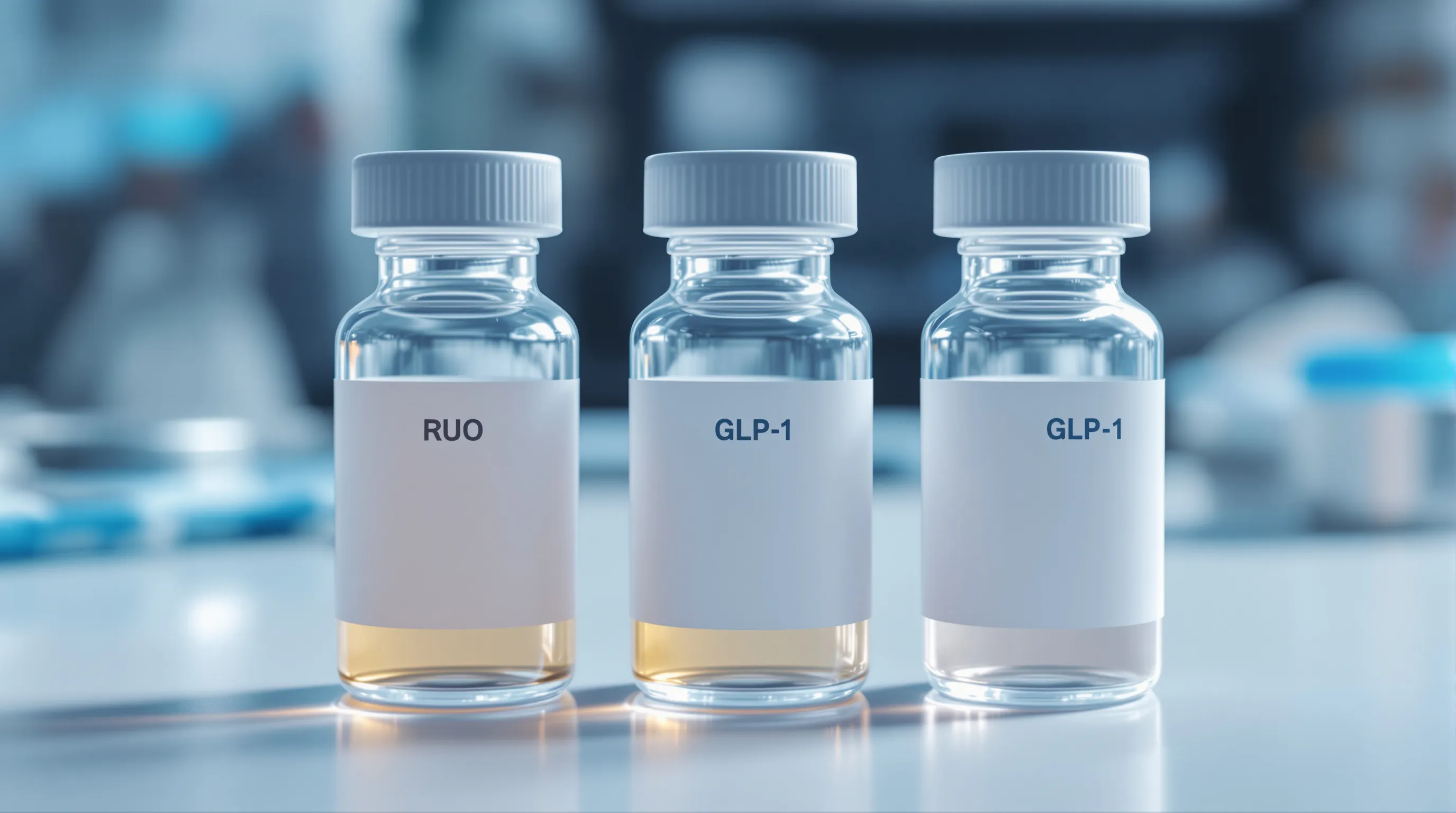
Most peptide businesses walk into the merchant account conversation with the wrong assumption: that processors treat all peptides as one uniform risk category. They do not. Research-use-only compounds, dietary supplement peptides, and compounded GLP-1 analogs each route through a different underwriting file, land on a different acquiring bank's books, and carry a different reserve requirement. The label printed on your product (and the compliance documentation behind it) determines whether your credit card processing application gets approved, modified with conditions, or declined outright. In my experience working with peptide merchants across all three categories, the classification question is the one that matters most and gets asked the least.
Questions this article answers
- Does my peptide's legal product class affect my merchant account approval and processing terms?
- Which peptide category (RUO, dietary supplement, or compounded GLP-1) gets the most favorable credit card processing rates?
- How do underwriters and acquiring banks distinguish between the three classifications when reviewing a peptide application?
Quick Answer
The Short Answer
Yes, your peptide's legal product classification directly determines your credit card processing terms. Research-use-only (RUO) peptides carry the highest reserve (typically 20-30% rolling) and processing rate (3.5-4.5%) because acquirers price both regulatory risk and card-network policy violations. Supplement-classified peptides that meet DSHEA labeling requirements qualify for a nutraceutical-adjacent treatment (closer to 10-15% reserve and 3.0-4.0% rate). Compounded GLP-1 analogs are the hardest category to place in 2026; most mainstream acquiring banks exited this sub-category after FDA enforcement actions in 2025, and those still active typically require reserves of 25-35% and rates of 4.0-5.5%. The classification also determines which MID you receive, which acquiring bank sponsors the account, and how long it survives if regulatory pressure escalates.
Across the peptide merchants we have onboarded at SeamlessChex, research-use-only products carry an average rolling reserve of 20 to 30 percent, roughly twice the 10 to 15 percent reserve we see for supplement-classified peptide businesses. Compounded GLP-1 analogs, after the wave of FDA enforcement actions in 2025 that shuttered more than eight major vendors, now face reserve requirements of 25 to 35 percent where a dedicated acquiring bank will touch them at all. The distinction between these three categories (RUO, dietary supplement, and compounded GLP-1) is not semantic. It is the single variable that routes your application to a different underwriting desk, a different sponsor bank, and a different rate and reserve structure. Processors who sell you one generic "peptide solution" without asking about your product class are, at best, pricing all three categories at the worst-case rate. At worst, they are putting your account on infrastructure that cannot sustain your specific compliance profile.
I have watched RUO businesses with clean compliance documentation get approved where their peers, selling what appears to be the same compound, get declined because they positioned as a supplement without the DSHEA labeling and GMP documentation to back it. I have also watched compounded GLP-1 merchants submit applications that should never have been submitted without a pre-submission review, because the acquiring bank they were sent to exited that sub-category entirely in late 2025. Product classification is not background information. It is the first thing an underwriter looks at, and the most predictive variable for whether your credit card processing gets approved and how long it stays that way.
What "Research Use Only" Means for Payment Underwriting
Research Use Only is a regulatory label that designates a compound for laboratory or academic research purposes, not for human consumption, not for diagnostic use.
In the peptide market, RUO became the dominant framework because it allows vendors to sell biologically active amino acid chains without going through the FDA's drug approval process. The thinking was: if the label says "research only," the regulatory liability sits with the buyer. Payment networks have a more skeptical read of that distinction, as of .
Visa and Mastercard have explicit policies about research chemicals. Stripe's prohibited business list includes "incorrectly labeled research chemicals" under its dangerous materials category, and flags "pseudo-pharmaceuticals or nutraceuticals that are not safe or make harmful claims" as prohibited. Neither policy is new, but enforcement escalated sharply in 2024. Card networks began systematically reviewing peptide merchant portfolios, and the impact hit entire processors, not just individual bad actors. As documented in r/PaymentProcessing, entire processor portfolios shut down overnight, affecting every merchant on that infrastructure regardless of individual compliance quality.
What "Research Use Only" Means for Payment Underwriting refers to a structured approach to what "research use only" means for payment underwriting that directly impacts operational efficiency and outcomes.
What "Research Use Only" Means for Payment Underwriting refers to a structured approach to what "research use only" means for payment underwriting that directly impacts operational efficiency and outcomes.
What underwriters price when they see "RUO" is the gap between what the label says and what the customer base is doing. If your website has dosing information, before-and-after photos, references to therapeutic effects, or any language tying the compound to a human health outcome, that RUO disclaimer is what the FDA now calls "pretextual", and what acquirers use as grounds for termination. The FDA confirmed in 2025 that it had begun using AI to scrape vendor websites specifically for this type of language, and acquiring banks apply similar signals.
RUO classification routes to specialized high-risk acquiring banks that hold research chemical merchant portfolios. Mainstream processors (Stripe, Square, PayPal, Shopify Payments) do not have an approval path. The acquiring banks that do have a path require:
- Rolling reserve of 20-30% held for a minimum of 180 days
- Processing rate of 3.5-4.5% plus per-transaction fees
- Third-party COA (Certificate of Analysis) for every product SKU
- Website compliance review confirming no human-use language anywhere on the domain or linked social properties
- Legal opinion letter in most cases for merchants processing above $50,000 per month
The reserve is not punitive: it reflects the real probability that an RUO account terminates mid-processing-cycle, and the bank needs funds available to cover disputes during wind-down. I have seen RUO businesses lose accounts while active chargebacks were pending. The reserve is what prevents a catastrophic shortfall during that window.
The RUO model as it operated for the last decade is under genuine regulatory pressure. But there is still a path to stable credit card processing for businesses that have the compliance documentation to support the positioning, a website that holds up to scrutiny, and a COA structure that shows the acquiring bank what they need to see. Classification alone is not enough: consistency between the classification and every other touchpoint is what makes an application hold.

When a Peptide Qualifies as a Dietary Supplement (and How That Changes the Underwriting)
The dietary supplement pathway, governed by the Dietary Supplement Health and Education Act (DSHEA) of 1994, allows businesses to sell amino acid chains and peptides as supplements without FDA pre-market approval, provided specific, auditable conditions are met. For peptide businesses, the supplement classification is the most favorable path to stable credit card processing, because it routes to nutraceutical acquiring banks rather than research chemical underwriting desks. That routing difference translates directly to better terms and a more durable account structure.
To position a peptide product as a dietary supplement, a business must satisfy four conditions that underwriters can actually verify:
- Supplement Facts labeling: The label must include a Supplement Facts panel (not just an ingredients list), the required "not evaluated by the FDA" disclaimer, and a structure-function claim that stays within DSHEA bounds: no disease treatment claims
- GMP manufacturing: The product must be manufactured in a facility operating under Current Good Manufacturing Practices (21 CFR Part 111). This is auditable: an acquirer will ask for the GMP certificate from the manufacturer
- Claim boundaries: Supplements may make structure-function claims ("supports joint recovery") but not disease claims ("treats arthritis"). The line is enforced and regularly tested by the FTC and FDA
- Dietary ingredient status: The compound must be recognized as a dietary ingredient, either pre-dating DSHEA's enactment in 1994 or supported by a safety record adequate to the supplement standard
From an underwriting standpoint, supplement-classified peptides typically land on nutraceutical MIDs. Acquiring banks in this space process collagen supplements, protein powders, and botanical products alongside your peptide SKUs. Their risk models are calibrated to refund disputes and label compliance issues, not regulatory shutdown risk. That difference in risk model translates to:
- Reserve: 10-15% rolling (versus 20-30% for RUO)
- Rate: 3.0-4.0% (versus 3.5-4.5% for RUO)
- Longer account stability because the acquirer's portfolio is less exposed to card-network policy changes targeting research chemicals
The peptide products best positioned as dietary supplements include collagen peptides (which are sold at mass retail with no classification ambiguity), specific amino acid formulations, GHK-Cu positioned for skin wellness, and certain BPC-157 formulations positioned for gut support, provided the claims stay within DSHEA bounds and the manufacturing documentation exists.
The risk I see most often in supplement peptide applications is classification drift. A merchant has the Supplement Facts panel on the label, but their social channels are full of recovery timelines, body composition claims, and before-and-after photos that read as drug promotion. An acquirer can approve under the supplement framework and still terminate when a compliance review flags the marketing. What we review before submitting a supplement peptide application: GMP certificate, COA, label copy, and a full audit of the website and linked social properties.
Compounded GLP-1 Analogs: The Third Classification and Why It's the Most Complex
Compounded GLP-1 analogs (versions of semaglutide, tirzepatide, and retatrutide produced by 503A or 503B compounding pharmacies rather than the brand-name manufacturers) occupy the most scrutinized position in the peptide payment processing landscape.
The classification is legally distinct from RUO (these are compounded drugs, not research chemicals) and from dietary supplements (these are drugs being compounded, not nutrients). That distinction matters to underwriters because the regulatory risk profile, the card-network compliance requirements, and the acquiring bank landscape are all different.
The compounding pathway was opened to broad distribution by a specific regulatory mechanism: the FDA drug shortage list. When a drug is on the shortage list, licensed compounding pharmacies can produce copies without the restrictions that would otherwise apply. Beginning in 2022, when Ozempic and Wegovy demand outpaced supply, compounded semaglutide became legal to produce at scale. Tirzepatide followed. This created the market that drove enormous growth in the compounded GLP-1 space from 2022 through 2024.
The enforcement response has been significant and accelerating:
- The FDA issued more than 50 warning letters to compounders, online sellers, and clinics in late 2024 through 2025
- Eli Lilly filed federal suits against telehealth companies distributing tirzepatide in April 2025
- Tailor Made Compounding pled guilty and forfeited $1.79 million for distributing unapproved drugs including BPC-157 and CJC-1295
- Paradigm Peptides' principals pled guilty in December 2025 to introducing unapproved drugs into interstate commerce
- The FDA removed BPC-157, Epitalon, GHK-Cu, MOTS-c, TB-500, and others from the 503A compounding list in April 2026
- More than eight major research peptide vendors closed between mid-2025 and early 2026, more than in the previous five years combined
Card network compliance for GLP-1 compounds has its own specific naming requirements. If you are selling semaglutide, the card-network-compliant descriptor is GLP1-S: not the generic name, not the brand name, not any variation. Tirzepatide must be described as GLP2-T. Retatrutide as GLP3-R. Merchants processing with any other naming convention have accounts flagged by automated compliance sweeps before a human reviewer looks at the file. I have seen merchants lose processing precisely because of descriptor errors that had nothing to do with their product's compliance status.
Most acquiring banks that previously held compounded GLP-1 portfolios exited the category in 2025. The banks that remain active are fewer in number, more selective, and require substantially more documentation than they did eighteen months ago. At SeamlessChex, we conduct a full regulatory compliance review of any GLP-1 compound application before submitting to underwriting. Submitting to the wrong bank is not a neutral act: a declined application creates a paper trail that makes the next submission harder.
Reserve expectations for compounded GLP-1 merchants currently active in the market: 25-35% rolling reserve. Processing rate bands: 4.0-5.5%. These numbers reflect the current market reality, not a permanent state, but businesses planning cash flow around compounded GLP-1 processing need to build for this reserve level until the regulatory environment stabilizes.
Peptide Classification Decision Tree: Which Path Applies to Your Business?
- Is your compound biologically identical to an FDA-approved drug (e.g., semaglutide, tirzepatide)?
- Yes → Compounded GLP-1 path. Requires 503A/503B pharmacy license, shortage-list eligibility review, and card-network-compliant naming (GLP1-S, GLP2-T, GLP3-R).
- No → Go to Step 2
- Is your product labeled with a Supplement Facts panel, manufactured in a GMP facility, and marketed with structure-function claims only (no disease or human-use language)?
- Yes → Dietary Supplement path. Route to nutraceutical MID. Reserve 10-15%, rate 3.0-4.0%.
- No → Go to Step 3
- Is your product labeled "for research use only, not for human consumption," with no dosing guidance and no human-use marketing anywhere on your domain or social channels?
- Yes → RUO path. Route to high-risk research chemical MID. Reserve 20-30%, rate 3.5-4.5%. Legal opinion letter required above $50k/month.
- No → Classification review required before application. Mixed signals will result in decline.
How Product Classification Routes Your MID, Reserve, and Rate
The three classifications do not just affect how a processor describes your account. They route your application to entirely different acquiring banks, different risk teams, and different pricing infrastructure.
Understanding this routing is what separates merchants who build stable accounts from merchants who get approved and terminated six months later when the acquirer discovers a classification mismatch.
| Classification | Typical Reserve | Rate Band | MID Type | Approval Complexity | Primary Risk Driver |
|---|---|---|---|---|---|
| Research Use Only (RUO) | 20-30% rolling (180-day hold) | 3.5-4.5% | High-risk research chemical MID | Moderate: requires COA, website compliance review, legal opinion letter at higher volumes | Card-network policy violations; FDA enforcement risk; account termination during active dispute window |
| Dietary Supplement (DSHEA) | 10-15% rolling (90-180-day hold) | 3.0-4.0% | Nutraceutical MID | Lower: requires GMP certificate, COA, DSHEA-compliant label, clean website claims | Refund disputes; FTC label enforcement; marketing claims drift |
| Compounded GLP-1 | 25-35% rolling (180-270-day hold) | 4.0-5.5% | Specialized pharmaceutical compounding MID | High: limited bank options post-2025; requires 503A/503B documentation, full compliance review, card-network-compliant naming | FDA enforcement actions; pharma litigation; card-network naming violations; shortage-list status changes |
Why the MID type matters beyond pricing: A merchant account MID is tied to a specific acquiring bank and that bank's sponsor relationship with Visa and Mastercard. RUO peptide merchants typically land on MIDs with acquiring banks that have specialized high-risk portfolios built around research chemical compliance. Supplement peptide merchants land on nutraceutical acquiring banks whose risk models are calibrated to refund disputes and label claims, not regulatory shutdown cycles. When card-network policy changes target research chemicals, supplement merchants on nutraceutical MIDs are largely insulated. When FDA enforcement actions hit RUO vendors, it rarely affects supplement merchants on a separate MID infrastructure.
A business that misrepresents itself as a supplement to land on a nutraceutical MID exposes itself to immediate termination when the acquirer runs a periodic compliance review. I have watched this happen: a merchant who positioned as a nutraceutical because the rate was better got approved, operated for three months, and was terminated when a compliance sweep identified the product as RUO. The rolling reserve was held for 180 days. The reserve recovery period was longer than their operating capital could sustain.
On the rate structure: The flat rate ranges above reflect combined processing costs for typical volume bands. For established businesses processing $25,000 or more per month in any of these three categories, interchange-plus pricing is typically available and more cost-effective than flat rate at higher volume. The correct comparison is not flat rate vs. flat rate: it is the all-in effective rate across interchange, markup, and per-transaction fees at your specific volume.
Before
Before: Applying Without Knowing Your Classification
A peptide business applies to a high-risk processor describing its products as "peptides" without specifying classification. The processor submits to a nutraceutical bank (lower reserve). Three months later, a compliance sweep identifies the products as RUO compounds. Account terminated. Rolling reserve held for 180 days. Chargeback disputes from the termination period create an additional 90-day settlement delay. The business loses access to $40,000 in working capital for six months while rebuilding processing infrastructure on a second MID that should have been the first application.
After
After: Applying With Classification Documentation in Place
The same peptide business completes a pre-submission compliance review. RUO classification confirmed, website human-use language removed, COAs organized per SKU. Application submitted to the correct high-risk research chemical acquiring bank. Approved in 8 business days. Rolling reserve set at 22%. Account stable 14 months later, with a reserve reduction to 18% after 12 months of clean processing history and a chargeback ratio under 0.4%.
What Underwriters Actually Look for When They See "Peptide"
An experienced underwriter reviewing a peptide application spends roughly equal time on the product documentation and the business's online presence.
The two have to tell a consistent story. When they do not, the discrepancy is the finding, not the individual document problems. Here is what the review actually covers, by classification:
| Document / Signal | RUO Required | Supplement Required | GLP-1 Compound Required |
|---|---|---|---|
| Third-party COA (Certificate of Analysis) | Yes, per SKU | Yes, per SKU | Yes, per SKU, plus batch records |
| GMP certificate from manufacturer | Helpful, not required | Required | Required (503A/503B pharmacy license) |
| Legal opinion letter | Required at $50k+/month | Not typically required | Required in most cases |
| DSHEA-compliant label | Not applicable | Required (Supplement Facts panel) | Not applicable |
| Card-network-compliant naming | No GLP names in descriptor | No GLP names in descriptor | GLP1-S, GLP2-T, GLP3-R only |
| Website compliance review | Required (no human-use language) | Required (structure-function claims only) | Required (no dosing, no therapeutic claims) |
| Processing history (preferred) | 12+ months clean | 6+ months clean | 12+ months clean |
Beyond documentation, there are behavioral signals that shift underwriting outcomes significantly:
Chargeback ratio: The card network threshold is 1% by volume (Visa) or 1% by count (Mastercard). High-risk processors begin monitoring accounts that approach 0.75%. Peptide businesses face elevated chargeback exposure because the product is expensive, customer expectations are high, and the regulatory ambiguity leads some buyers to dispute charges they knowingly initiated. A chargeback prevention strategy (clear product descriptions, proactive customer outreach, a visible and fair refund policy) is part of the compliance picture, not separate from it.
Volume thresholds and minimum requirements: SeamlessChex works with established peptide businesses processing a minimum of $25,000 per month. Below that threshold, the dedicated high-risk MID infrastructure required in this vertical does not make economic sense for either party. Merchants below that volume level should plan to build processing history on lower-friction payment rails before applying for a dedicated high-risk account.
The website review in practice: Underwriters look at product pages, claims language, FAQ content, social media links and their content, terms of service, refund policy, and any third-party reviews that surface on a basic search. The FDA uses AI to scan for pretextual RUO disclaimers. Acquirers apply similar signals internally. One FAQ that answers "how much should I take," one product description that mentions a health condition, one before-and-after photo in a linked social post: any of these can turn an approvable application into a conditional approval with elevated reserve, or an outright decline.
At SeamlessChex, our pre-submission compliance review for peptide merchants typically identifies two to three issues that, left uncorrected, would result in decline or an elevated reserve. Most merchants are genuinely surprised by what surfaces when they audit their own site the way an underwriter does. We think of this review as the most valuable part of the onboarding process, because getting it right before submission protects both the approval outcome and the long-term stability of the account.
Peptide Classification at a Glance
- Reserve: 20-30%
- Rate: 3.5-4.5%
- MID: Research Chemical
- Key doc: COA + legal letter
- Reserve: 10-15%
- Rate: 3.0-4.0%
- MID: Nutraceutical
- Key doc: GMP cert + label
- Reserve: 25-35%
- Rate: 4.0-5.5%
- MID: Pharma Compound
- Key doc: Pharmacy license + naming
Questions This Article Answers
Key Questions This Article Answers
- Does my peptide's legal product class determine my merchant account terms?
- What reserve and rate should I expect for an RUO peptide business versus a supplement peptide business?
- Why did my peptide processor terminate my account, and what can I do to prevent it next time?
- How do card network naming rules for GLP-1 compounds affect my ability to accept credit cards?
- What documentation does an underwriter need to approve a peptide merchant account in 2026?
What Will Matter Most for Peptide Payment Processing in the Next 12-24 Months
The regulatory and card-network environment affecting peptide payment processing is not static, and the classification that describes your business accurately today may need to be re-evaluated as enforcement priorities shift. From what I see in our merchant portfolio and in the broader underwriting market, three dynamics are likely to shape the landscape for RUO, supplement, and compounded GLP-1 businesses through 2027.
The RUO Framework Will Narrow Further
The operational model that allowed vendors to sell injectable peptides to anyone with a credit card as long as the product page included "not for human consumption" has fundamentally changed. The FDA's use of AI to detect pretextual disclaimers, combined with multi-state AG enforcement actions and card-network deplatforming, has raised the compliance bar for what a viable RUO business looks like. The vendors who survive and maintain stable credit card processing will be those who can demonstrate genuine research-buyer customer bases, institutional sales documentation, and a website presence that is unambiguous about the non-human-use positioning. Merchants who rely on the RUO label as a legal shield while operating a de facto consumer supplement business will face increasing termination frequency as acquirers run more sophisticated compliance sweeps.
The Supplement Pathway Becomes More Attractive (and More Competitive)
As the RUO framework narrows, more peptide businesses will attempt to qualify their products under DSHEA. This creates two competing effects: more merchants doing the compliance work correctly (which stabilizes the nutraceutical acquiring bank portfolio) and more merchants misclassifying products as supplements without the supporting documentation (which increases chargebacks and compliance events on those same MIDs). From an underwriting perspective, we expect nutraceutical acquiring banks to tighten their peptide-specific onboarding criteria over the next 12 months in response to this influx. Businesses that have their GMP certificates, compliant labeling, and clean claims documentation ready will have a processing advantage over those scrambling to build the documentation after their RUO account terminates.
Compounded GLP-1 Will Require Prescription-Based Infrastructure
The compounded GLP-1 market is moving toward a prescription-based model for any business that wants durable acquiring bank relationships. The shortage-list window is narrowing: several GLP-1 compounds have already been removed from shortage status, and the FDA's enforcement direction suggests that compounding pharmacies without robust prescription management infrastructure face continued risk. Merchants in this space should expect that within 18-24 months, the acquiring banks still active in compounded GLP-1 will require evidence of prescription-based sales workflows, prescriber relationships, and enhanced patient documentation. Businesses building that infrastructure now are positioning themselves for the next competitive cycle in the GLP-1 compounding market.
Forecast: 12-24 months
Where Peptide Sellers And Their Processors Head
Three scored forecasts on how peptide classification, vendor survival, and merchant-account access shift over the next one to two years.
Forecasts for the RUO peptide trade
Read each as a probable move by vendors, processors, and buyers, weighted by how much evidence backs it.
Through 2026-2027 more RUO peptide vendors lose card processing over labeling that networks read as incorrectly labeled research chemicals or unsafe nutraceuticals, pushing sellers toward precise RUO, supplement, or GLP-1 classification before onboarding.
Despite closures, demand for peptides and for processors willing to bank GLP-1 and peptide merchants keeps rising over 12-24 months, so specialized high-risk processing - not prohibition - becomes the market's growth edge as no state has outlawed the RUO model.
The vendor base keeps thinning after at least eight significant research-peptide sellers - including Peptide Sciences, Amino Asylum, and Science.bio - closed between mid-2025 and early 2026, concentrating supply among fewer operators who can hold banking and payment relationships.
Early Indicators Underwriters report RUO vendors shut down over simple naming errors, and Stripe already lists incorrectly labeled research chemicals and unsafe nutraceuticals as prohibited. A multi-front enforcement campaign closed eight named vendors in under a year, more than in prior periods, with Peptide Sciences voluntarily discontinuing research-product sales. Searches for peptides rose 400% while buyers actively hunt for GLP-1 store and peptide merchant-account solutions even as vendors close.
What backs and what counters each call
Each forecast lists both the sources that support it and the market signals that push the other way.
- Seeing so many RUO Peptide companies payment processing is the strongest public backing for this call. [Community / Forum]
- The "Research Use Only" Model Is Under Coordinated Attack is what puts this forecast on the board. [Community / Forum]
- Diary Of A CEO: w/ Peptide Expert Dr. Alex Tatem (Transcript) is the clearest counter-signal. [Industry Publication]
- The case rests on The "Research Use Only" Model Is Under Coordinated Attack. [Community / Forum]
- Diary Of A CEO: w/ Peptide Expert Dr. Alex Tatem (Transcript) is what puts this forecast on the board. [Industry Publication]
- Pushing back: Peptide Sciences Shutdown: What Happened, Why It Closed, and. [Community / Forum]
- Seeing so many RUO Peptide companies payment processing is the strongest argument against it. [Community / Forum]
- The "Research Use Only" Model Is Under Coordinated Attack points the same way. [Community / Forum]
- Peptide Sciences Shutdown: What Happened, Why It Closed, and supports this forecast. [Community / Forum]
- Diary Of A CEO: w/ Peptide Expert Dr. Alex Tatem (Transcript) is the clearest counter-signal. [Industry Publication]
- Against it: How much are people making selling peptides ? [Community / Forum]
What could flip these forecasts
Scenarios in enforcement, labeling law, and demand that would reverse the direction shown here.
Confidence, With Limits
Of everything here, 77 rests on the firmest ground, and 77 carries the most open questions.
- If regulators or buyers move in the opposite direction, Classification decides processing survival would weaken first.
- If the source mix shifts toward stronger contrary evidence, Demand outlasts the shutdowns could become the more durable forecast.
Frequently Asked Questions
Does my peptide's product classification actually change my credit card processing terms?
Yes, significantly. Research-use-only, dietary supplement, and compounded GLP-1 classifications each route to different acquiring banks with different reserve requirements, rate bands, and documentation standards. The classification is the single most predictive variable in the underwriting outcome.
Can I apply for a peptide merchant account as a supplement even if my product is technically RUO?
No. Misclassifying an RUO product as a dietary supplement to access nutraceutical MID terms is grounds for termination when the acquirer runs a compliance review (typically within 3-6 months of approval). The reserve is held, and the termination creates a record that affects your next application. Classification must match the product, the label, and the manufacturing documentation.
What are the card network naming rules for compounded GLP-1 products?
Card networks require specific naming conventions for GLP-1 compounds in merchant descriptors and product documentation. Semaglutide must be listed as GLP1-S. Tirzepatide as GLP2-T. Retatrutide as GLP3-R. Using the generic name, brand name, or any variation triggers automated compliance sweeps that flag and potentially terminate the account before a human reviewer is involved.
What reserve should I expect for my peptide merchant account?
Reserve bands by classification: RUO peptides typically 20-30% rolling, held for 180 days minimum. Dietary supplement peptides typically 10-15% rolling, held for 90-180 days. Compounded GLP-1 analogs typically 25-35% rolling, held for 180-270 days given the current regulatory environment. Reserves can be reduced after 12+ months of clean processing history and a chargeback ratio under 0.75%.
What is the minimum volume to get a dedicated peptide merchant account?
SeamlessChex works with established peptide businesses processing a minimum of $25,000 per month. Below that threshold, the dedicated high-risk MID infrastructure in this vertical does not make economic sense for either party. Businesses below that volume should plan to build processing history on lower-friction rails before applying for a dedicated account.
What documentation do I need to apply for a peptide merchant account?
All three classifications require a third-party COA per SKU and a clean website with no human-use language. RUO merchants additionally need a legal opinion letter at $50,000+ per month. Supplement merchants need a GMP certificate and DSHEA-compliant label. GLP-1 compound merchants need 503A or 503B pharmacy license documentation and card-network-compliant naming in place before submission.
How does SeamlessChex's pre-submission compliance review work?
Before submitting a peptide merchant application, we review your product classification, COA documentation, website claims language, social media presence, and label or pharmacy documentation. We typically identify two to three issues that, if uncorrected, would result in decline or an elevated reserve. This review is included as part of our standard onboarding for peptide merchants and is the most effective way to protect your approval outcome and account longevity.
Key Takeaways
Key Takeaways
- Classification determines routing: RUO, dietary supplement, and compounded GLP-1 each route to a different acquiring bank, MID type, reserve band, and processing rate: there is no single "peptide" underwriting bucket.
- RUO carries the highest reserve: Expect 20-30% rolling reserve and 3.5-4.5% rates for research-use-only peptides; the reserve reflects real termination risk, not arbitrary pricing.
- Supplements qualify for nutraceutical terms: DSHEA-compliant peptide products route to nutraceutical MIDs with 10-15% reserve and 3.0-4.0% rates, but only if GMP manufacturing, compliant labeling, and clean claims documentation are all in place.
- Compounded GLP-1 is the hardest category: Most acquiring banks exited in 2025; those remaining require 25-35% reserve and card-network-compliant naming (GLP1-S, GLP2-T, GLP3-R).
- Misclassification causes termination: Applying to the wrong MID type is not a neutral act: it results in account termination, a 180-day reserve hold, and a paper trail that makes the next application harder.
- Pre-submission compliance review is essential: A website audit, COA review, and classification confirmation before submission is the single highest-impact step in the approval process.
Peptide payment processing is not a single category with a single set of terms. It is three distinct underwriting tracks (research-use-only, dietary supplement, and compounded GLP-1), each with its own acquiring bank infrastructure, documentation requirements, reserve band, and stability profile. Businesses that understand which track they are on, and build the compliance documentation to support that positioning consistently, have a fundamentally different processing experience than those who apply with a generic "high-risk" pitch and hope for the best.
What I have seen consistently across the merchant accounts we manage is that the classification decision is almost always made before anyone thinks about payment processing, but it should be made with payment processing in mind. The label you put on your product, the claims language on your website, and the manufacturing documentation behind your COA all flow directly into the underwriting file that determines your MID, your reserve, and your rate. Getting those three things right before you apply is the most effective way to improve your approval outcome and build an account that stays active.
SeamlessChex works with established peptide businesses across all three classifications. We process a minimum of $25,000 per month in volume, and we do a pre-submission compliance review as a standard part of onboarding. If your business is in this space and you want to understand which classification applies and what your processing path looks like, we are a practical place to start that conversation.
Sources & Further Reading
References
- r/PaymentProcessing: Seeing so many RUO Peptide companies payment processing getting shut down (community discussion on RUO merchant account terminations and card-network compliance requirements)
- r/PaymentProcessing: RUO peptide payment processor (merchant perspectives on reserve and rate expectations for RUO peptide businesses)
- Stripe: Prohibited and Restricted Businesses Policy (Stripe's published policy on research chemicals and nutraceuticals)
- r/ScienceBioTechnology: Peptide Sciences Shutdown: What Happened, Why It Closed (analysis of 2026 market consolidation and H.R.6509 SAFE Drugs Act)
- r/GLP1ResearchTalk: The "Research Use Only" Model Is Under Coordinated Attack (timeline of FDA enforcement actions, DOJ cases, and pharma litigation against RUO peptide vendors 2024-2026)
- Diary of a CEO / singjupost.com: Peptide Expert Dr. Alex Tatem Transcript (clinical classification and safety evidence for peptide compounds)
- SeamlessChex Peptide Merchant Account (our dedicated peptide payment processing service page)
- What Documentation High-Risk Underwriters Actually Need (SeamlessChex guide to underwriting documentation requirements)
Related Articles
- Peptide Processor Approval Odds by Product Category
- The 2026 Approval Outlook for GLP-1 and Peptide Sellers
- High-Risk Card Funding: 72 Hours vs a 180-Day Reserve
- What Documentation High-Risk Underwriters Actually Need to Approve Your Application
- The 3 Costs High-Risk Sellers Miss Beyond the Processing Rate
Written by
Jonathan Albert
Co-Founder, SeamlessChex
Jonathan Albert is Co-Founder of SeamlessChex, a credit card processing and fintech payments platform recognized on the Inc. 5000.
Connect on LinkedInTo qualify for a SeamlessChex account, a business needs an established operating history and $25,000+ in monthly processing volume.