


Quick Answer
Flat-rate aggregators such as Square, Stripe, PayPal and Shopify tend to end FFL card accounts once they notice firearms sales; dedicated high-risk merchant accounts remove that ban but still face holds.
No source reviewed for this article measures account survival by setup. Mastercard, Visa and American Express now carry a dedicated firearms merchant category code, which makes those sales easier to identify than they once were. Until survival data exists, I judge a setup on fit: does the processor already board firearms dealers, and was it told exactly what the business sells? Subscription businesses seeking recurring billing merchant accounts face the same approval logic. Fit outlasts price.
Key Points
- Dealers on r/FFLs in August 2026 warned that Shopify will shut down stores selling guns, so an aggregator account tends to last only until the platform notices.
- According to the California Attorney General's office, Mastercard, Visa and American Express announced adoption of a firearms merchant category code less than a month after a September 2, 2022 request.
- A dedicated high-risk MID is underwritten for firearms before the first transaction clears, though holds remain; SeamlessChex boards established dealers processing $25,000 or more per month .
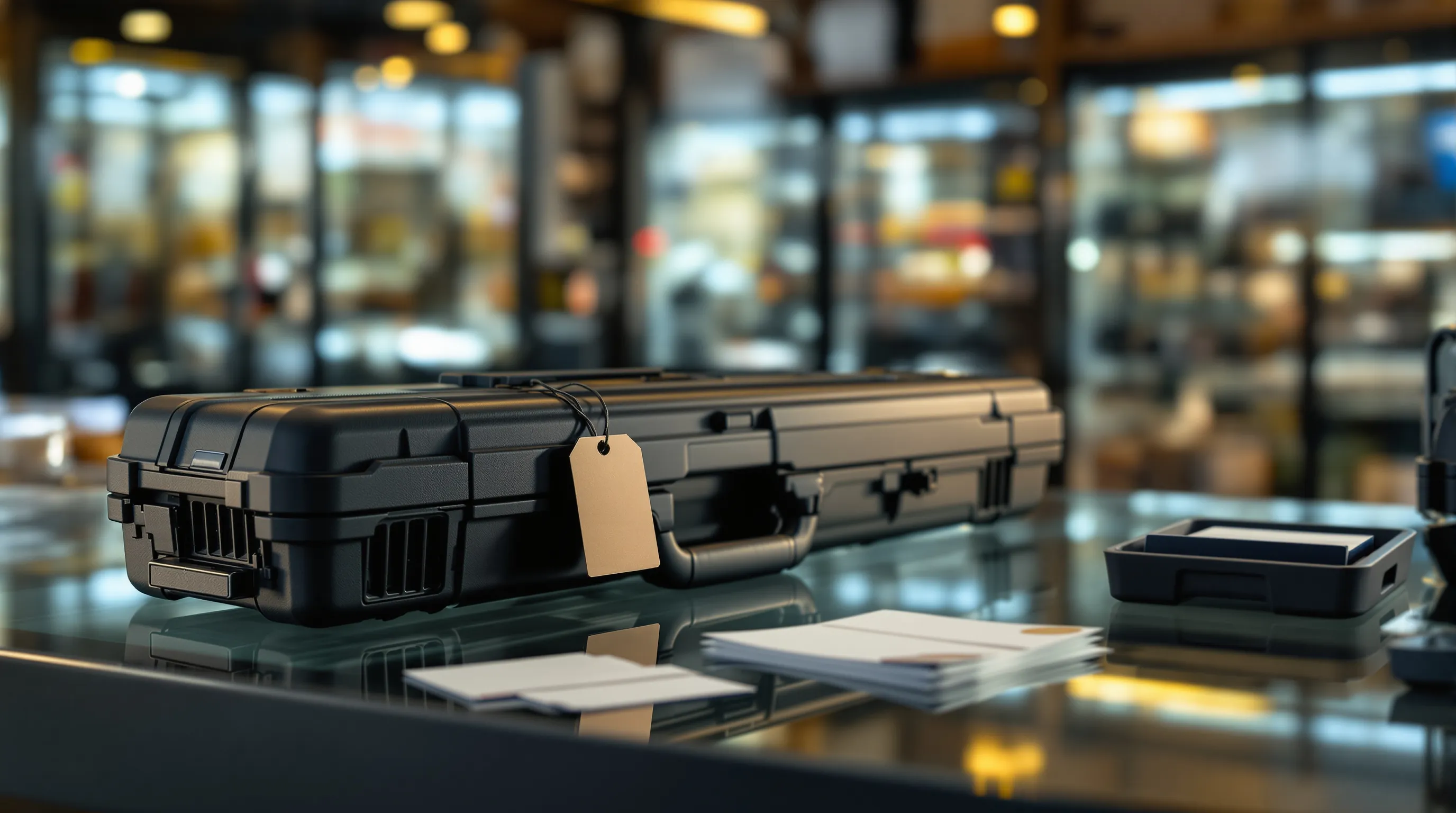
For an FFL, how long card processing lasts depends on the setup behind the terminal.
Approval goes to businesses whose processor already underwrites their model, described honestly, with a second payment rail ready. Apply while the current account still works, so any switch happens on your schedule.
Firearms dealers are not the only ones asking. Subscription businesses want to know how to get approved for recurring billing merchant accounts, nutraceutical brands hunt for a merchant account that will hold, and buyers across high-risk categories keep asking which credit card processing solutions work best for them. Most answers rank providers by fees. Fewer ask whether a processor's own terms allow the category at all.
That blind spot costs an FFL more than most merchants. In a 2013 r/guns thread, a commenter identifying as a First Data manager quoted small gun shops 1.75%, against 2.75% at Square and about 3.50% at PayPal. None of those numbers said which account would close first. What the record does show is how firearms became easy to spot inside the card system.
A merchant category code (MCC) is the label a card network attaches to a merchant to describe what it sells. According to the California Attorney General's office, electric razor stores, tent stores and leather goods stores each had their own code before the change, while brick-and-mortar gun stores had no unique code at all. The office said the new firearms code would "help law enforcement crack down on illegal firearm sales."
For a dealer, the consequence is practical. Every card sale now carries a label a processor can read. An aggregator whose terms bar firearms no longer has to guess.
So I would frame the approval question more narrowly than the rankings do: does this processor already board businesses shaped like mine, and will it still want them once it sees the code? The sections below follow that question through flat-rate aggregators, dedicated high-risk MIDs and the setup choices a dealer controls, starting with a seller agreement clause that pulled firearms out of every sales channel at once.
Every FFL that takes cards eventually asks how long the account will last. Rankings of gun friendly credit card processors are easy to find. The more useful question to put to any setup is what would have to happen for it to close.
Two setups dominate. A flat-rate aggregator such as Square, Stripe, PayPal, or Shopify Payments boards many small merchants under one master account at one blended price. A dedicated high-risk MID is a merchant identification number issued to your business alone, after an underwriter has reviewed it as a firearms dealer.
Dealers on r/FFLs described the first setup bluntly in August 2026: "FYI Shopify will shut you down if you're selling guns or other restricted items." Another commenter hedged in a way that matters more for survival: "Many others (probably Shopify) will ban you if they know you are selling guns." The licensee who started that thread ran the website, inventory and in-person point of sale on Shopify, with counter sales making up most of the business, so a ban could reach the shop floor too. And since the card networks adopted a firearms merchant category code in 2022, noticing has potentially become easier.
My view is simple. If your current processor never asked about firearms during onboarding, ask it now, in writing, whether its terms allow them. A dedicated MID starts from the opposite premise, because the underwriter knows what you sell before your first transaction clears.
Why do flat-rate aggregators close compliant FFL accounts?
Flat-rate aggregators close FFL accounts because their master terms bar firearms across the whole category, so a fully compliant dealer can lose card processing through a policy update alone.
Before you rely on an aggregator account, answer three questions about it:
- Does the platform's seller agreement list firearms, firearm parts, or ammunition as prohibited?
- Does that ban cover every sales channel, or only online, mail, and phone orders?
- Were you underwritten as a firearms business, or onboarded as a generic retailer?
If the answers come back yes, yes, and generic, the account's lifespan depends on the platform, not on you.
Square's seller agreement shows how quickly eligibility can vanish. In 2013, a firearm retailer posting to r/guns compared two versions of item (23). The old wording prohibited only "internet/mail order/telephone order firearm or weapon sales." The new wording prohibited "sales of (i) firearms, firearm parts or hardware, and ammunition; or (ii) weapons and other devices designed to cause physical injury." In-person retail, previously unlisted, was now covered. The retailer's read on the notice was blunt: "You're about to get dropped and you need to start looking for a new processor."
Nothing in that change required a dealer to break a rule. On an aggregator, the dealer is a sub-merchant under the platform's master terms. Those terms decide eligibility for the entire category at once.
The pattern has not faded. In a 2025 r/guns discussion, a commenter representing a provider that works with firearms dealers named Stripe, Square, and PayPal as processors that don't support firearms sales, "even when everything is fully compliant." Dealers in 2026 FFL forums warn that Shopify will shut down stores selling guns or other restricted items, and one added that a dealer allowed to stay still pays Shopify an extra fee for using an outside processor. A firearms-focused processor's own onboarding video makes the same claim from the vendor side: many mainstream providers prohibit firearm sales altogether.
The common assumption is that a dealer loses an aggregator account by doing something wrong. A comparison of 5 sources shows the same logic from different angles: policy text and platform detection end these accounts, and compliance stops neither one. In none of these accounts is dealer misconduct the stated trigger. The category is.
When our underwriting team described card rip merchants in September 2026, the point was that a processor prices the shape of a business rather than the product on its label, and the real qualification question is whether a processor already boards that shape. I think the same test fits firearms. An aggregator answers it with a blanket no. A dealer who wants a different answer needs dedicated merchant payment processing that underwrites the firearms shape before the first sale, which raises a harder question about whether that setup protects against holds as well as terminations.
Does a dedicated high-risk merchant account protect an FFL from holds and termination?
Partly. A dedicated high-risk merchant account removes the category ban that ends aggregator accounts, but it does not stop holds on large payments or a provider leaving the firearms segment.
Dedicated firearms-friendly accounts exist, and their pricing is public. In a 2025 r/FFLs thread, one commenter quoted an interchange-plus setup at $15-20 per month, 0.80-1.50% over interchange, and $0.10 per item, plus gateway fees. Another dealer in that 2025 discussion reported an average cost per charge of about 1.6-2%, not counting a $10 monthly subscription. Three dealers said their setups had caused no account problems, and one summed it up in two words: "Zero issues."
That is the case for a dedicated account. The underwriter knows it is boarding a firearms business. Nobody discovers it later. The terms you sign were written with your category in mind, not against it.
The case against treating it as permanent is just as concrete. An affiliate roundup of gun-friendly providers reports that dealers have found sudden holds placed on large payments processed through entirely legal means, and it notes that firearms businesses face higher chargeback risk because of the high value of their products. The same roundup says its recommended providers can process online firearms sales only between FFL holders, not directly to consumers. A processor marketing its own shooting sports package goes further, claiming that "a number of financial institutions, merchant services providers and lenders have recently withdrawn" from the segment. For a dealer with high average tickets, one held batch can strain cash flow quickly.
The larger change sits above any single processor. According to the California Attorney General's office, Rob Bonta and New York Attorney General Letitia James asked card companies on September 2, 2022 to create a merchant category code for firearms, and Mastercard, Visa, and American Express announced adoption less than a month later. Before then, gun and ammunition retailers were coded as "miscellaneous" or "sporting goods." Networks use these four-digit codes to set interchange rates and assess transaction risk.
A firearms sale now carries its own label at the network level. Choosing a dedicated account does not remove that label. It means the label is accurate from day one.
My read is that a dedicated MID changes who decides the fate of your account, not whether anyone is watching. A specialist underwriter who boarded you knowingly is less exposed to an exit over the category itself, yet holds, chargeback reviews, and provider withdrawals remain live risks for any dealer selling high-ticket goods. If an earlier termination already placed your business on the MATCH list, MATCH list merchant account approval is its own path, and it starts with disclosing that history up front. For everyone else, the open question is how to set up the account so a hold slows the business instead of stopping it.
How long does an FFL card account last, and what finally ends it?
We went looking for a survival clock, months on an aggregator against months on a dedicated account. No source we found has measured one. What the record does show starts with a single word search.
In May 2013, a firearm retailer posted on a Reddit gun forum about an email from a major mobile card reader company titled "Updating our Seller Agreement." For a firearm retailer, the poster wrote, such a notice usually means higher rates or "You're about to get dropped and you need to start looking for a new processor." So "naturally I hit CTRL-F and typed in firearm."
One clause, before and after the update
Old item (23): "internet/mail order/telephone order firearm or weapon sales"
New item (23): "sales of (i) firearms, firearm parts or hardware, and ammunition; or (ii) weapons and other devices designed to cause physical injury"
Prohibited-business list in the aggregator's seller agreement, as quoted by the retailer, May 2013.
The old wording banned remote sales only. The new wording dropped any mention of channel, so the counter sale, the gun show sale and the box of ammunition all fell under the ban. No dealer had to break a rule. The rule itself changed.
In the 13 years since, dealers still describe the same thing. "Most mainstream payment processors want nothing to do with gun sales, even if fully compliant," wrote the author of a November 2025 thread asking dealers which processors they trust, before a sharper question: "What are you all using that won't randomly freeze funds?"
So how long does an aggregator account last? An August 2026 thread on a subreddit for federal firearms licensees comes close to an answer. A dealer running a website and inventory on a mainstream e-commerce platform asked about card payments. Commenters took a shutdown for granted but hedged on timing. Platforms "will ban you if they know you are selling guns," one wrote. Another described a platform that "lets you stay for a while." Nobody gave a number, and the clock they described runs until the platform notices.
Discovery matters for a second kind of account too. In a January 2025 thread, a commenter said they knew "at least one FFL" who opened card payments by describing the business "very generally like sporting goods," adding, "I would never do that myself." The card system long made that label plausible. According to the California Attorney General's office, gun and ammunition retailers had no merchant category code of their own and were classed as "miscellaneous" or "sporting goods." On September 2, 2022, the attorneys general of California and New York, who wanted the code as a law enforcement tool, asked the card companies to create one. Less than a month later, Mastercard, Visa and American Express announced they would adopt a firearms code. Networks and banks use these codes to "assess transaction risks, and generally categorize payments," the office said. A sporting goods account rests on the same gap as an aggregator account: the provider's picture of the business is incomplete.
Accounts with firearms-focused providers close that gap but, as the previous section showed, can still end. In the 2026 thread, one dealer said they had used a gun-friendly processor "over the last few years but just switched" to another. A vice president at a specialist processor said in an undated press release that processing options for FFL dealers "are getting smaller and smaller." We sell dedicated accounts, so we have a stake here. What differs is how each account ends: holds, exits and switches follow decisions a dealer can ask about before signing, while discovery comes without warning.
| Setup | What the record points to as the ending | Who decides | Warning sign in our sources |
|---|---|---|---|
| Flat-rate aggregator | A category ban in the seller terms, applied when the platform learns what you sell | The platform | A terms update notice |
| Account opened under a generic label | The provider finding out the business sells firearms | The provider | None reported |
| Account underwritten for firearms | Holds on large payments, the provider leaving the segment, or the dealer moving | The provider or the dealer | Sudden holds on large legal payments |
Nobody has put a number of months on any setup. The sources still show something a dealer can use: on an aggregator or under a borrowed label, the account lasts until someone finds out what you sell. On an account underwritten for firearms, the provider knew what you sold from day one, and the remaining risks are ones you can ask about up front.
- Search your current seller agreement for the word firearm, and run the same search on every terms update notice before you archive it.
- Ask your provider in writing whether it has approved firearms sales on your account, by name.
- If your account was opened as sporting goods or general retail, ask your processor how the account is coded today and whether the description on file matches what you sell.
- Before you sign with any firearms-focused provider, ours included, ask what triggers a hold on a large payment, how long funds stay held, and how long the provider has boarded firearms dealers.
How we checked this
We read four dealer discussion threads from 2013 to 2026, a 2022 press release from the California Attorney General, a 2026 affiliate guide to firearm merchant accounts, and an undated press release from a specialist processor. The forum posts are individual accounts that show what can happen. They can't show how often it happens. The 2013 clause text is the retailer's quotation of the agreement, not the agreement itself. The affiliate guide may be paid by the providers it lists. The press release comes from a processor that sells to firearms dealers. We sell dedicated accounts to established dealers processing $25,000 or more a month, so we have a stake too. None of these sources measures how long accounts survive, and this section does not draw on our own onboarding records, so we can't put a number of months on either setup. Also unknown: whether the firearms code has made aggregators detect gun sellers faster.
- Reddit r/guns, firearm retailer's thread on a seller agreement update, May 2013.
- Reddit r/guns, dealer thread on trusted payment processors, November 2025.
- Reddit r/FFLs, licensee thread on card payments and e-commerce platforms, August 2026.
- Reddit r/FFLs, thread from a new home-based licensee, January 2025.
- California Attorney General's office, press release on the firearms merchant category code, September 30, 2022.
- PaymentPop, guide to firearm merchant accounts, August 22, 2026 (discloses an advertising program).
- Finextra, specialist processor's press release on serving gun sellers, undated, published without editing by Finextra.
How should an FFL choose and set up a processor so the card account lasts?
Choose a processor that already underwrites firearms dealers, describe the business exactly as it operates, and keep a second relationship ready, since processors price a business's real shape rather than its label.
That last idea comes from our underwriting team, though it was stated about card rip and mystery-pack merchants, not firearms. In that note, a merchant applying as a simple card shop was misdescribing its business, and the application was expected to lay out the real profile and how each element is controlled. I find the lesson transfers cleanly to an FFL. Apply as what you are.
From there, five steps reduce the risk that remains:
- Confirm the processor already boards firearms businesses. Ask which channels it supports: in-store, online, and gun shows. An affiliate roundup of gun-friendly providers advises contacting several of them to confirm what each can support and to compare offerings.
- Submit a complete, accurate application. One firearms-focused processor's onboarding video lists an FFL license, business formation documents, a government-issued ID, and sometimes product listings or website links, and it claims approval can take anywhere from a day to a week.
- Ask how disputes and large tickets are handled. The same roundup weighs providers on firearms industry experience, chargeback protection, data security such as encryption and tokenization, and transparent pricing. Get each answer in writing before you sign.
- Build your storefront on a stack the processor supports. The vendor video names WooCommerce, BigCommerce, and GunBroker as common integrations. In an August 2026 r/FFLs thread, a Shopify-based FFL decided to get "a whole new system" and drop Shopify completely after peers warned against staying.
- Keep a second relationship and watch the account after go-live. Another dealer in that thread had used one firearms-friendly processor "over the last few years" before switching to a different provider. In a 2025 r/FFLs thread, one dealer split the work across two providers, Payroc for internet sales and QuickBooks for the counter, noting that QuickBooks "now allows" in-person 2A sales.
The fifth step matters most for cash flow. A dedicated account with no backup still leaves one point of failure. A second payment rail, such as ACH bank payments where your provider supports them, can potentially keep some revenue moving during a card hold, while credit card processing stays the primary way customers pay.
Monitoring is the quiet part of the job. The vendor video's advice is "Once you're live, don't just set it and forget it," and I agree with it. Watch transaction volume, the payout schedule, and customer behavior, so the first sign of a hold reaches you well before it reaches payroll.
Where do FFL card accounts go from here?
Expect more dealers to leave platform-bundled payments for firearms-specialist processors, paired with storefront and back-office software those processors already support.
One rewrite of a seller agreement once moved Square's firearm ban from the web and phone to the shop counter. Nothing in the newer dealer reports suggests aggregators are heading back. A dealer on a firearms licensee forum in 2025 put the practical answer plainly: "There are plenty of credit card processors out there, you should shop around. Some do not like or support 2a businesses."
The specialist processor quoted earlier says its shooting sports package carries endorsements from the NRA Business Alliance and the National Shooting Sports Foundation, but an endorsement is not a track record. I'd want months from approval to termination, how often holds land, and the stated reason for each closure, all split by setup. Until someone publishes that, the policy text is the best predictor a dealer has.
My outlook would change if Square, Stripe, PayPal, or Shopify reopened firearm sales to licensed dealers, or if the networks dropped the firearms code. Until then, build on a dedicated credit card merchant account and keep a second relationship warm before the next seller agreement email lands.
Frequently Asked Questions
What else do FFL owners ask about card processing accounts?
Most remaining questions come down to platform bans, the firearms merchant code, which processors dealers trust, and how quickly an established dealer can move to a dedicated card account.
Will Shopify shut down an FFL that sells guns?
Dealers on a firearms licensee forum in August 2026 expected it to. One put it flatly: "Shopify is a nogo for FFLs." Another hedged with "if Shopify lets you stay for a while," which tells me the timing depends on when the platform notices, not on whether it will.
Which card processors do other FFLs recommend?
In that same 2026 discussion, Payroc was recommended by name in four places, and one dealer said they use Xplor Pay because it is "specifically gun friendly." Peer names make a decent shortlist. I would still put one plain question to every candidate: do you already board firearms dealers who sell the way I do?
What is a firearms merchant category code?
A merchant category code is the ISO classification that card networks and financial institutions assign to a merchant to set interchange rates, assess transaction risk and categorize payments. Mastercard, Visa and American Express adopted a dedicated firearms code after a coalition of 11 state attorneys general pressed for one.
Does the firearms code mean a processor will close my account?
Not by itself. The evidence behind this article does not show any account closed because of the code. What the code does is make a firearms sale easy to identify, and on a platform whose terms bar firearms, being easy to identify is the whole problem.
How quickly can an established FFL open a SeamlessChex credit card merchant account?
SeamlessChex offers same-day onboarding with no contracts for established dealers that meet its monthly volume minimum. Underwriting still has to review the business as it actually runs. Start through the SeamlessChex contact page.
Can one setup handle counter sales and online orders?
Yes. SeamlessChex supports credit card and ACH payments online or in-person, with card processing as the main rail and ACH as a supporting option. The harder part is the software around it: one dealer in that 2026 thread had to build a custom integration between FastBound and their processor, and is "working on the dropship piece now."
Written by
Jonathan Albert
Co-Founder, SeamlessChex
Jonathan Albert is Co-Founder of SeamlessChex, a credit card processing and fintech payments platform recognized on the Inc. 5000.
Connect on LinkedInSeamlessChex works with established businesses processing a minimum of $25,000 per month.