


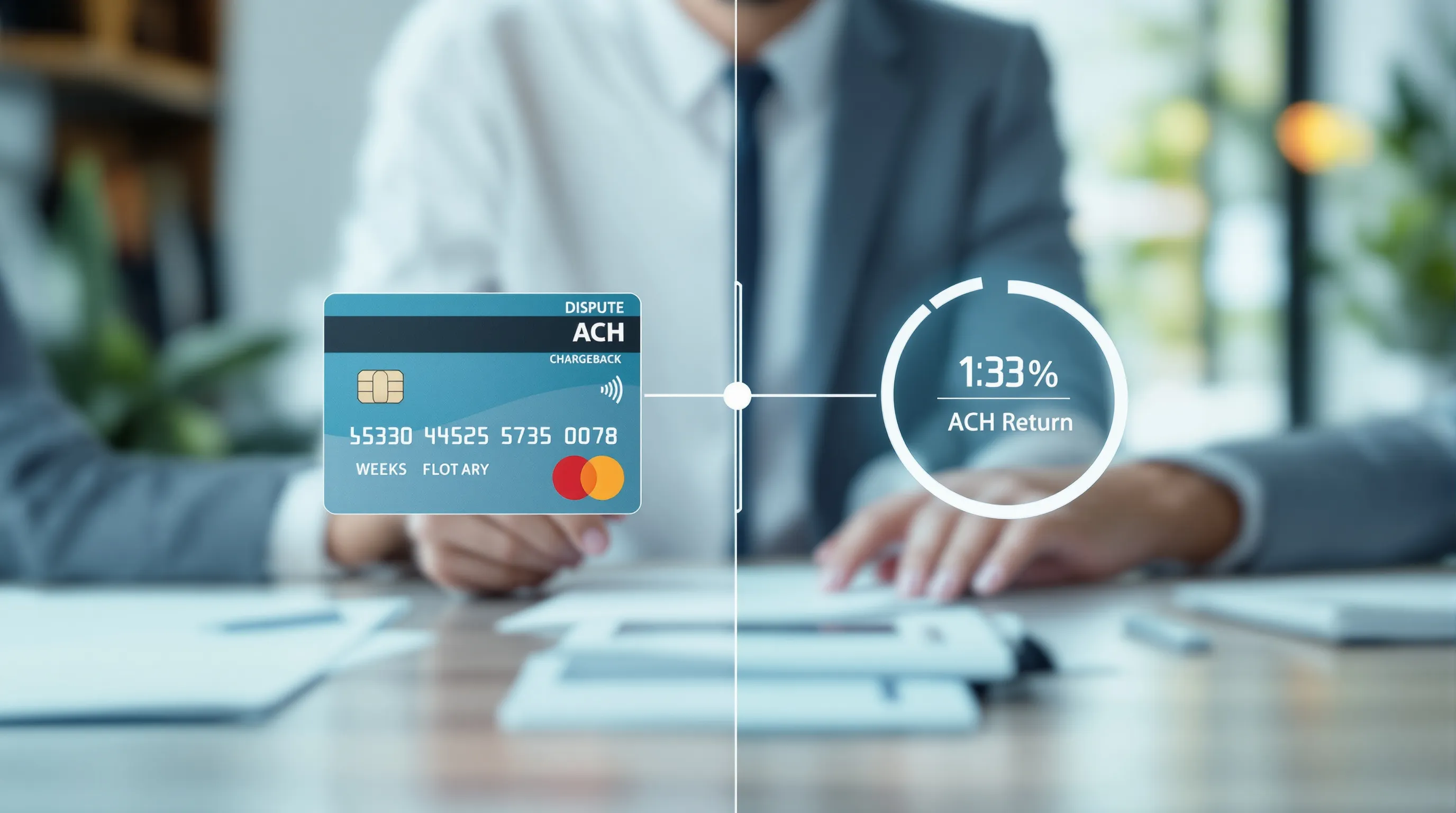
When a bank reverses a payment, most merchants focus on the dollar amount walking out the door. The more important question is which reversal clock just started running. Card chargebacks and ACH returns can look identical from the outside, a debit hit, funds gone, but they operate under completely different rule sets, with different timelines, different liability standards, and different paths to recovery. One gives you a structured window to fight back with evidence. The other demands prevention before the payment clears. Knowing which one landed, and acting on it within hours rather than days, is the difference between recovering the funds and writing off the loss.
Questions this article answers
- Can a bank reverse a payment after it has already settled?
- How long does a merchant have to respond before the dispute window closes?
- What recovery options exist for card chargebacks versus ACH returns?
Quick Answer
Yes, a bank can reverse a payment after settlement, but whether you have two days or two months to respond depends on which rail the payment traveled. ACH returns can land within 2 business days. Card chargebacks give merchants a formal response window of 30 days or more. The recovery playbook is completely different for each, and using the wrong one wastes the only opportunity to recover the funds.
The short answer: For card payments, contest the chargeback with a representment package within 30 days of notification. For ACH returns, especially unauthorized ones, your leverage is almost entirely in the authorization documentation you collected before the debit ran.
How a Card Chargeback Works (and Why the Timeline Is Your Advantage)
A card chargeback begins when a cardholder disputes a charge with their issuing bank. The bank credits the cardholder, initiates a reversal through Visa or Mastercard, and your acquiring bank debits your account.
It looks final. It is not, as of .
Merchants have a formal representment window, typically 30 days from the chargeback notification date, to contest the dispute with evidence. The card networks require review from both sides before issuing a final ruling. That review process is where merchants with solid documentation regularly recover funds.
How a Card Chargeback Works (and Why the Timeline Is Your Advantage) refers to a structured approach to how a card chargeback works (and why the timeline is your advantage) that directly impacts operational efficiency and outcomes.
How a Card Chargeback Works (and Why the Timeline Is Your Advantage) refers to a structured approach to how a card chargeback works (and why the timeline is your advantage) that directly impacts operational efficiency and outcomes.
Key card chargeback facts for merchants:
- Cardholder dispute window: 60 to 120 days from the transaction date (up to 180 days for select reason codes)
- Merchant response window: 30 days from the chargeback notification
- Per-chargeback fee: $15 to $100, separate from the disputed amount
- Chargeback monitoring threshold: 0.9% monthly ratio triggers Visa's Dispute Monitoring Program; 1.8% triggers the High-Risk tier
For high-risk merchants, the chargeback ratio is the real stake. Exceeding the threshold does not just mean fees. It means the card networks can require your processor to close the account. Winning representments is as much about protecting the account as it is about recovering individual transactions. If you are operating in a vertical like high-risk credit card processing, your buffer is narrower than you think.
How an ACH Return Works (and Why Days, Not Weeks, Is the Danger)
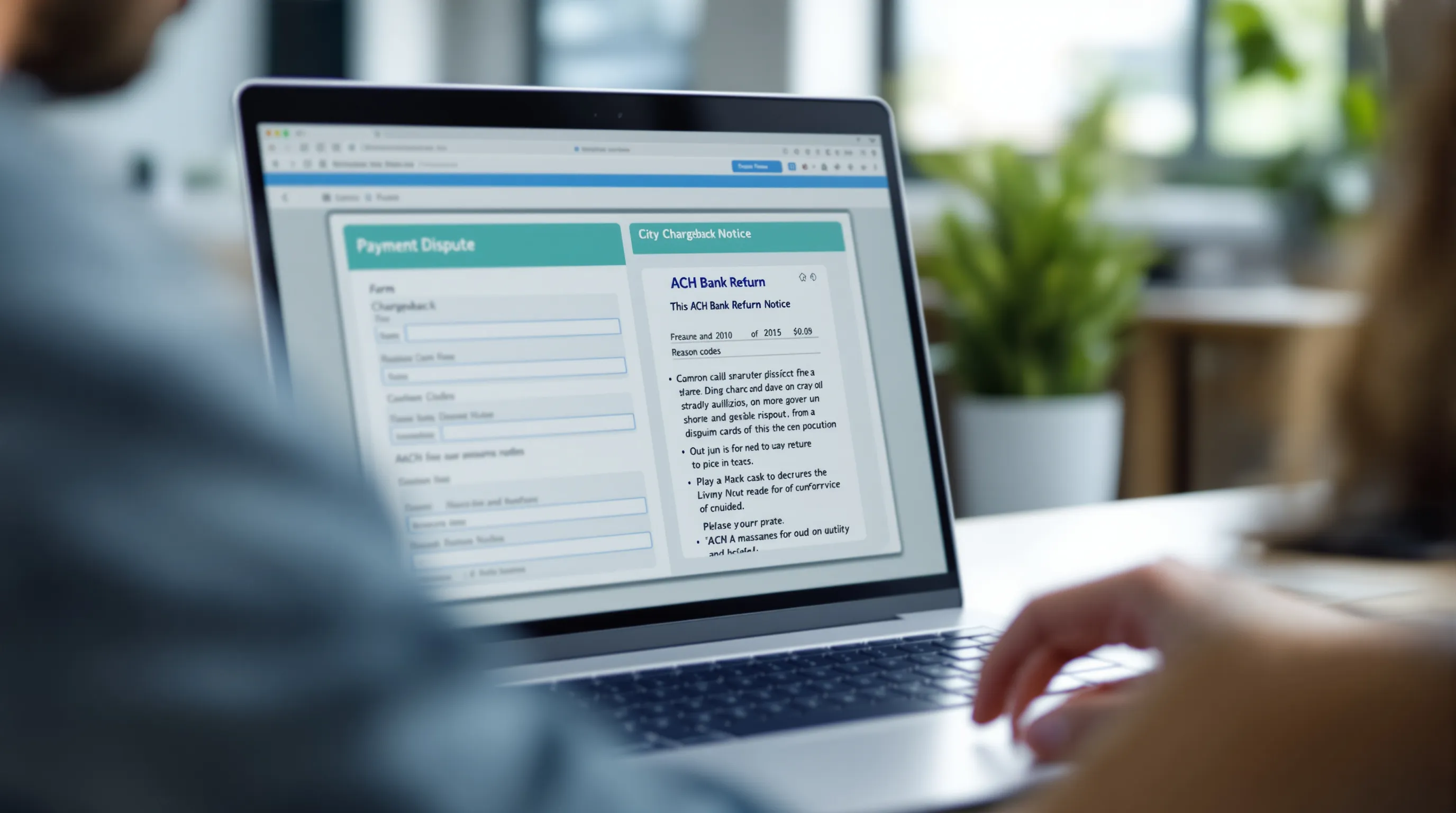
ACH returns move faster than most merchants expect. When a bank returns an ACH debit, it sends a return entry with a Nacha reason code back through the network.
The timeline depends on the reason code.
Administrative returns typically arrive within two to three business days. Non-sufficient funds (R01), closed accounts (R02), and invalid account numbers (R04) resolve quickly, often before the original transaction has fully posted in your accounting system.
Unauthorized returns are the more serious exposure. Under Nacha rules, consumers have 60 calendar days from their bank statement date to claim a debit was unauthorized, filed under reason code R10. There is no formal merchant representment equivalent. If the return is honored, practical recovery options narrow to collections or small claims court.
Key ACH return facts for merchants:
- Administrative returns (R01, R02, R04): 2 to 3 business days
- Unauthorized consumer claims (R10): up to 60 calendar days from statement date
- Nacha unauthorized return threshold: 0.5% rate, above which your Originating Depository Financial Institution faces penalties
- Return fee: $2 to $5 per item, plus possible ODFI fees
The core difference from chargebacks: ACH dispute resolution is almost entirely preventive. By the time an R10 return lands, the window to protect yourself on that specific transaction is already closed.
The Recovery Playbook: What to Do When Each Type Lands
The response strategy depends entirely on which reversal arrived. Using the wrong playbook wastes the only window available.
When a card chargeback arrives:
- Act the same day. The 30-day merchant response window starts at the notification date, not the original transaction date.
- Pull the full transaction record: IP address, device fingerprint, signed authorization, delivery confirmation, and any customer communication.
- Submit a representment package with a rebuttal letter tied to the specific reason code. Generic responses rarely succeed; code-specific documentation does.
- Work with a processor that actively supports the representment process. High-risk merchants especially benefit from processors with dedicated chargeback management.
When an ACH return arrives:
- Identify the reason code first. Administrative returns (R01, R02) may indicate a solvable customer issue. You may re-present the debit with proper notice or request an alternative payment method.
- Do not re-present an R10 (unauthorized) return without fresh written authorization. Nacha prohibits it, and a violation can cost you ACH origination access.
- For R10 disputes, options narrow quickly: direct customer contact, collections referral, or write-off.
- Audit your authorization documentation. Written consent with clear billing descriptors, collected before the debit initiates, is the primary defense against future R10 claims.
From what I have seen working with high-risk merchants, the businesses that manage reversal losses best treat prevention and recovery as two separate workflows with dedicated owners, not one reactive scramble after funds leave.
Payment reversals are an operational reality at any processing volume. The margin between manageable losses and a terminated merchant account usually comes down to one thing: whether you knew which reversal clock was running and acted within the window. Card chargebacks give you a structured fight with formal network rules. ACH returns demand upfront defenses. Building both into your payment operations, ideally with a processor that understands the difference, is what keeps the account open and the revenue recoverable.
Written by
Lily Flanigan
Operations Manager, SeamlessChex
Lily Flanigan is Operations Manager at SeamlessChex, a credit card processing and fintech payments platform recognized on the Inc. 5000, where she focuses on operations and process optimization.
Connect on LinkedInFrequently Asked Questions
Can a bank reverse a payment after it has settled?
Yes. Card chargebacks can be filed by the cardholder up to 120 days after the transaction. Unauthorized ACH returns can be filed up to 60 calendar days from the consumer's bank statement date, even after funds have settled to the merchant.
How long does a merchant have to respond to a chargeback?
Typically 30 days from the chargeback notification date. Missing this window forfeits the dispute entirely. Some processors offer chargeback alert services that provide advance notice before the formal dispute is filed.
What separates an ACH return from a card chargeback?
A chargeback triggers a formal card network dispute with merchant representment rights. An ACH return is a Nacha-governed reversal with no equivalent formal dispute path for unauthorized claims filed under reason code R10.
Can a returned ACH payment be re-presented?
For administrative returns like non-sufficient funds (R01), yes, with proper customer notice. For unauthorized returns (R10), re-presenting without fresh written authorization violates Nacha rules and can result in loss of ACH origination access.
What chargeback ratio triggers a Visa monitoring program?
A monthly ratio above 0.9% triggers Visa's Dispute Monitoring Program. Above 1.8% triggers the High-Risk Dispute Monitoring Program, which carries additional fees and potential account termination risk.
Approval requires an established business track record and monthly processing volume of $25,000 or more.