



Quick Answer
Visa Account Updater and Mastercard Automatic Billing Updater push refreshed card credentials to enrolled merchants when a card expires or is replaced. Enrollment is opt-in: the cardholder cannot enable it on their end. Businesses without it lose subscribers to failed charges that never had to fail.
Most subscription payment failures caused by expired cards are involuntary: the subscriber did not choose to cancel. Visa Account Updater and Mastercard Automatic Billing Updater are card network services that automatically push updated card credentials to enrolled merchants, recovering revenue without requiring any action from the subscriber. Enrollment is opt-in. Not every merchant participates.
Questions this article answers
In this article:
- How does Visa Account Updater actually work?
- Where does Account Updater fall short, and what fills the gap?
- How do subscription businesses get approved for recurring billing merchant accounts?
Quick Answer
Account Updater refers to a pair of card network programs: Visa Account Updater (VAU) and Mastercard Automatic Billing Updater (ABU), that push refreshed card credentials to enrolled merchants automatically when a card expires or is replaced. According to r/CreditCards, the network delivers new card numbers to any merchant holding that account on file for recurring billing. The cardholder does nothing. When a charge fails anyway, most platforms record it as a cancellation, even if the subscriber never chose to leave. Enrollment is opt-in. That gap is where revenue loss starts.
Why Do Subscriptions Fail When Customers Never Meant to Cancel?
Card expiry is the leading cause of involuntary subscription churn, a payment failure that has nothing to do with whether a subscriber values your product.
An analysis of multiple consumer and practitioner threads shows a consistent pattern: when a credit card expires or is reissued, recurring charges fail at the next billing cycle, and many businesses record that failure as a cancellation. The subscriber never intended to leave. They simply had a new card number. That distinction matters enormously for how you respond, as of .
I'd call this the voluntary vs. involuntary churn test: before attributing any failed-payment cancellation to dissatisfaction, ask whether the subscriber took any deliberate step to cancel. If the only trigger was a card going stale, that revenue is recoverable: no re-acquisition cost required.
A common misconception is that issuing a new card stops a recurring charge. According to a thread on r/CreditCards documenting Visa Account Updater behavior, that is not what happens. Visa and Mastercard both operate automatic updater services that push new card credentials to enrolled merchants, so charges can process on freshly issued cards without any action from the cardholder.
Involuntary churn looks like cancellation. It is not.
How Does Account Updater Actually Work?
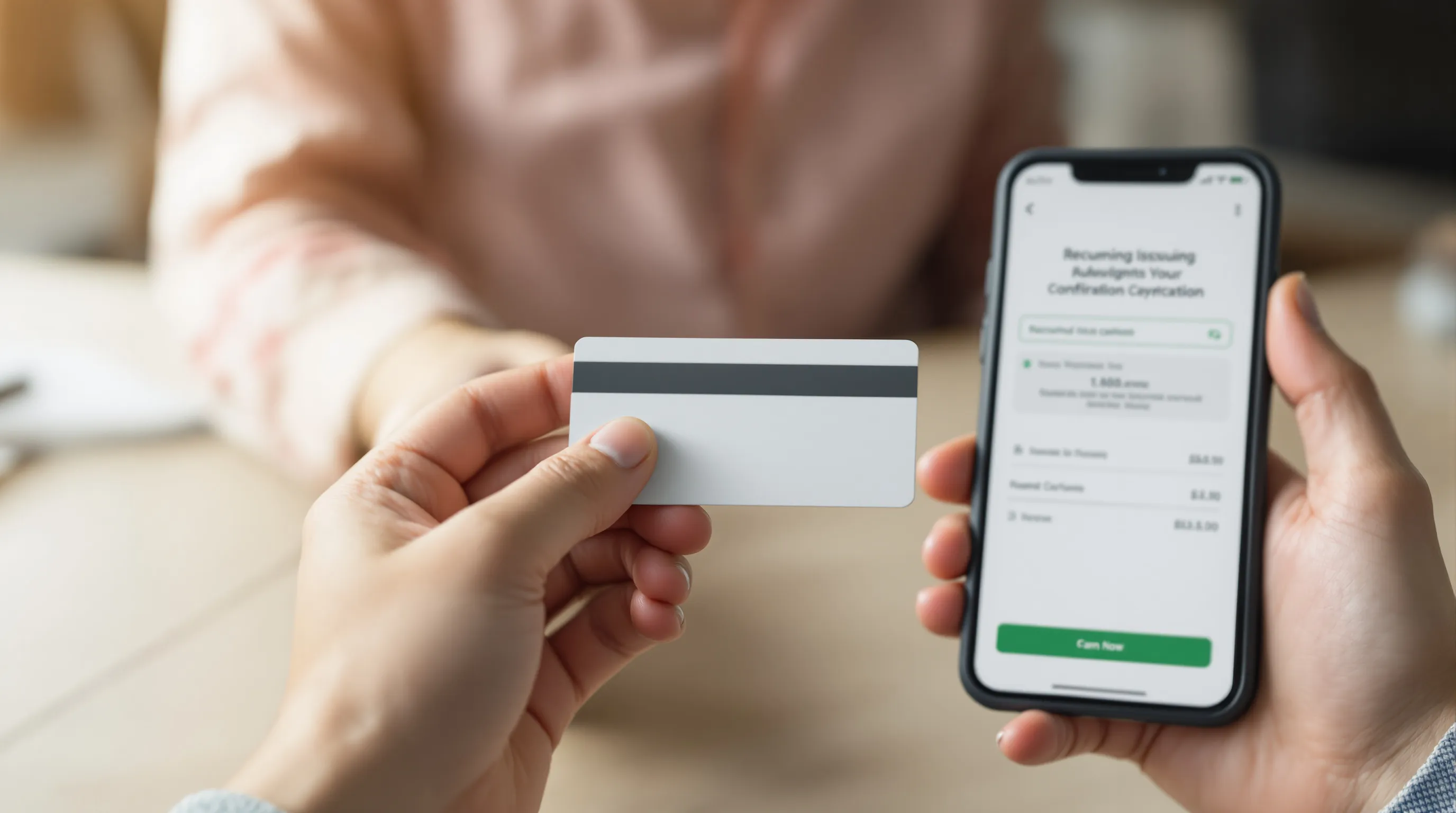
Visa Account Updater (VAU) and Mastercard Automatic Billing Updater (ABU) are card network services that automatically deliver new card credentials to enrolled merchants when a card is reissued or expires.
Here is what happens mechanically: when a bank issues a replacement card, it notifies the card network. That network then shares the updated card number and expiration date with any merchant who holds that card on file for recurring billing, provided the merchant has enrolled in the updater program. The subscription charges on the new card number. The subscriber never has to do anything.
According to r/CreditCards discussions on how the service operates, this is intentional network design. The framing from the card networks is that updating card details automatically is a convenience for cardholders, reducing the friction of managing payment credentials across dozens of subscriptions.
According to a separate r/CreditCards thread on opting out, cardholders have limited practical ability to prevent this from happening on their end. The decision to enroll rests entirely with the merchant.
In practice, this means enrollment is the merchant's responsibility. The takeaway: Account Updater works, but only for businesses that have signed up. Cardholders cannot turn it on or off for a specific merchant from their side of the relationship.
Where Does Account Updater Fall Short, and What Fills the Gap?
Account Updater reduces involuntary churn from expired cards. It does not eliminate every payment failure, and enrollment is not universal.
Not every merchant is enrolled. Enrollment in Visa Account Updater and Mastercard Automatic Billing Updater is opt-in, and businesses that have not signed up receive no automatic credential updates. A subscriber's card could be reissued and their new number sits at the network, but if the merchant is not enrolled, the next billing attempt still fails. The subscriber churns anyway.
Even for enrolled merchants, the update does not always arrive before the next charge attempt. Per-update costs can cause businesses to run update queries infrequently, which means a reissued card may trigger one failed charge before the refreshed data arrives. That failed attempt is enough to trigger an automatic account downgrade on some platforms.
There is also a less-discussed edge case. According to a documented r/CreditCards thread on Visa Account Updater, the same mechanism that helps legitimate merchants retain subscribers can also enable unauthorized charges to persist across card replacements: the network shares the new card number with any enrolled merchant holding that account on file, regardless of whether the subscriber intended to keep paying them.
According to developers working with Stripe's subscription tools, the answer to failed payments that slip through is a structured retry sequence (different timing intervals, different retry logic for soft declines versus hard declines). In practice, Account Updater plus a well-configured dunning sequence covers most of the gap.
What Will Matter Most for Subscription Businesses Choosing a Credit Card Processor?
Account Updater enrollment closes part of the involuntary churn gap. But a processor's stability, recurring-billing approval terms, and per-update costs will matter just as much over the next 12-24 months.
- Per-update costs will keep shaping enrollment decisions. According to r/CreditCards, Mastercard's Automatic Billing Updater charges merchants roughly 20-25 cents per card update. Businesses that run queries infrequently (monthly or quarterly) will continue to see recovery gaps between billing cycles.
- Automatic card updates are drawing more fraud scrutiny. The same mechanism that recovers revenue for enrolled merchants can let unauthorized charges persist when a card is replaced. Subscription businesses should expect more cardholder disputes tied to credential updates they did not authorize.
- Demand for stable recurring-billing accounts is rising. Active buyer searches for processors that support subscription businesses point to a growing pool of merchants displaced by platform shutdowns. A processor's approval track record and account stability will matter as much as its rate sheet.
What most subscription businesses miss: Account Updater enrollment is a retention tool, not a processing foundation. If a processor terminates your account mid-cycle, you lose more subscribers than any expired card could account for. Enrollment matters. Processor stability matters more.
Looking Ahead to 12-24 months
Where Card-Expiration Churn Fixes Are Headed
Three evidence-based forecasts on how card-updating services and recurring-billing merchant accounts evolve for subscription businesses.
What Happens Next With Account Updater
Use these forecasts to gauge how card-refresh services and merchant account approval will shift for subscription businesses.
As more subscription merchants lean on card network updater services, expect growing consumer and industry scrutiny of updater-linked unauthorized charges, with more cardholders attempting to opt out even though the mechanism offers them little to no timing control.
Demand will keep rising among subscription and high-risk businesses for processors that explicitly support recurring billing and offer approval paths after account shutdowns, as merchants look for alternatives when platforms like Stripe terminate their accounts.
Over the next 12-24 months, Visa Account Updater and Mastercard Automatic Billing Updater will remain paid, opt-in services that not all merchants enroll in, so a meaningful share of subscription payment failures from expired cards will keep requiring manual dunning and retry logic rather than being solved by updater feeds alone.
Early, Unconfirmed Signals Merchants report being charged roughly 20-25 cents per card update through Mastercard's Automatic Billing Updater and configuring it to run only monthly, quarterly, or after a failed payment because of that per-update cost, while enrollment itself remains optional rather than universal. A cardholder reported three separate waves of fraudulent recurring charges (about $300, $140, and $20) tied to a single merchant despite never shopping there, while other threads describe cardholders struggling to opt out of Visa Account Updater and Mastercard Automatic Billing Updater. Buyers are actively asking where to find the best credit card processor for subscription and recurring billing businesses, how to get approved for recurring billing merchant accounts, and how to keep accepting payments after Stripe shuts an account down.
Supporting And Contrary Evidence
Each forecast lists the market evidence that supports it alongside signals that could undercut it.
- Visa Account Updater Frustrations (Fraudulent Charges) is the strongest public backing for this call. [Community / Forum]
- How do I opt-out of my credit card company sending updated card supports this forecast. [Community / Forum]
- Mastercard Automatic billing updater, glitchy integration with is what puts this forecast on the board. [Community / Forum]
- Card Account Updater Service is the clearest counter-signal. [Community / Forum]
- Against it: Handling failed subscription payments with stripe. [Community / Forum]
- Mastercard Automatic billing updater, glitchy integration with is what puts this forecast on the board. [Community / Forum]
- Backing it: Card Account Updater Service. [Community / Forum]
- Subscription got renewed even after my card expired and complicates the call. [Community / Forum]
What Could Change These Forecasts
Regulatory action, network rule changes, or new fraud patterns could shift these predictions.
Our Margin for Error
Of everything here, 71 rests on the firmest ground, and 71 carries the most open questions.
- If regulators or buyers move in the opposite direction, Automatic card updates draw fraud scrutiny, not just retention praise would weaken first.
- If the source mix shifts toward stronger contrary evidence, Automatic card updates draw fraud scrutiny, not just retention praise could become the more durable forecast.
Involuntary churn from expired cards is recoverable. The enrollment decision rests with the merchant, not the cardholder. According to r/CreditCards, the card network pushes new credentials automatically to any enrolled merchant holding that account on file: the cardholder has limited ability to prevent it on their end. Without enrollment, every expired card becomes a lost subscriber who never chose to leave. I'd recommend pairing Account Updater enrollment with a structured dunning sequence to close whatever gap remains.
Written by
Lily Flanigan
Operations Manager, SeamlessChex
Lily Flanigan is Operations Manager at SeamlessChex, a credit card processing and fintech payments platform recognized on the Inc. 5000, where she focuses on operations and process optimization.
Connect on LinkedInFrequently Asked Questions
Can a cardholder prevent a merchant from receiving their updated card number?
The cardholder cannot disable updates for a specific merchant. Enrollment in Visa Account Updater and Mastercard's equivalent rests entirely with the merchant, not the cardholder. The cardholder has no mechanism to opt a particular business out of receiving new credentials.
Why does a subscription still fail even when Account Updater is active?
Enrollment does not guarantee the update arrives before the next charge attempt. According to r/CreditCards, a failed charge is often recorded as a cancellation on many platforms, even when the subscriber never chose to leave. Involuntary churn is a payment failure with no cancellation intent behind it.
SeamlessChex onboards established merchants; the practical minimum is $25,000 in monthly payment volume.